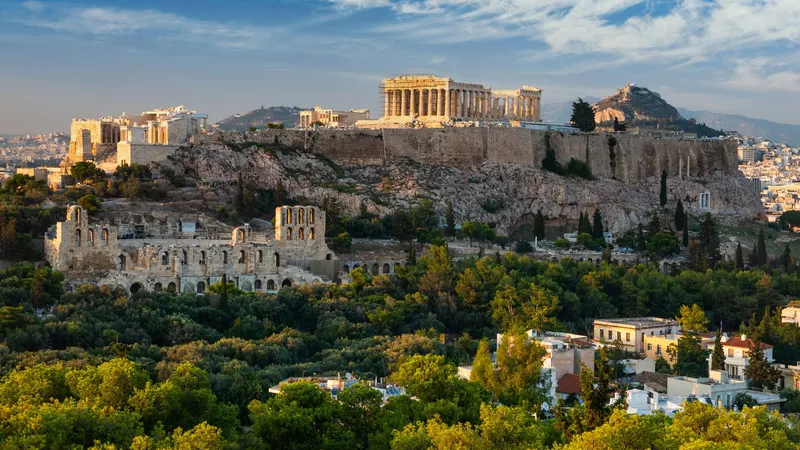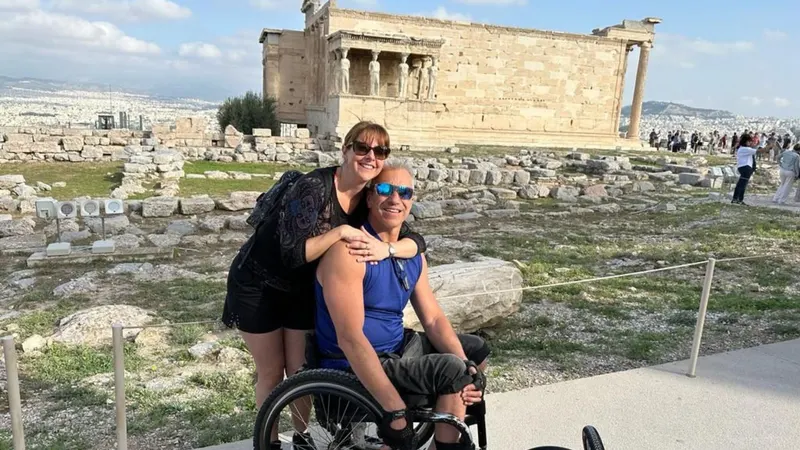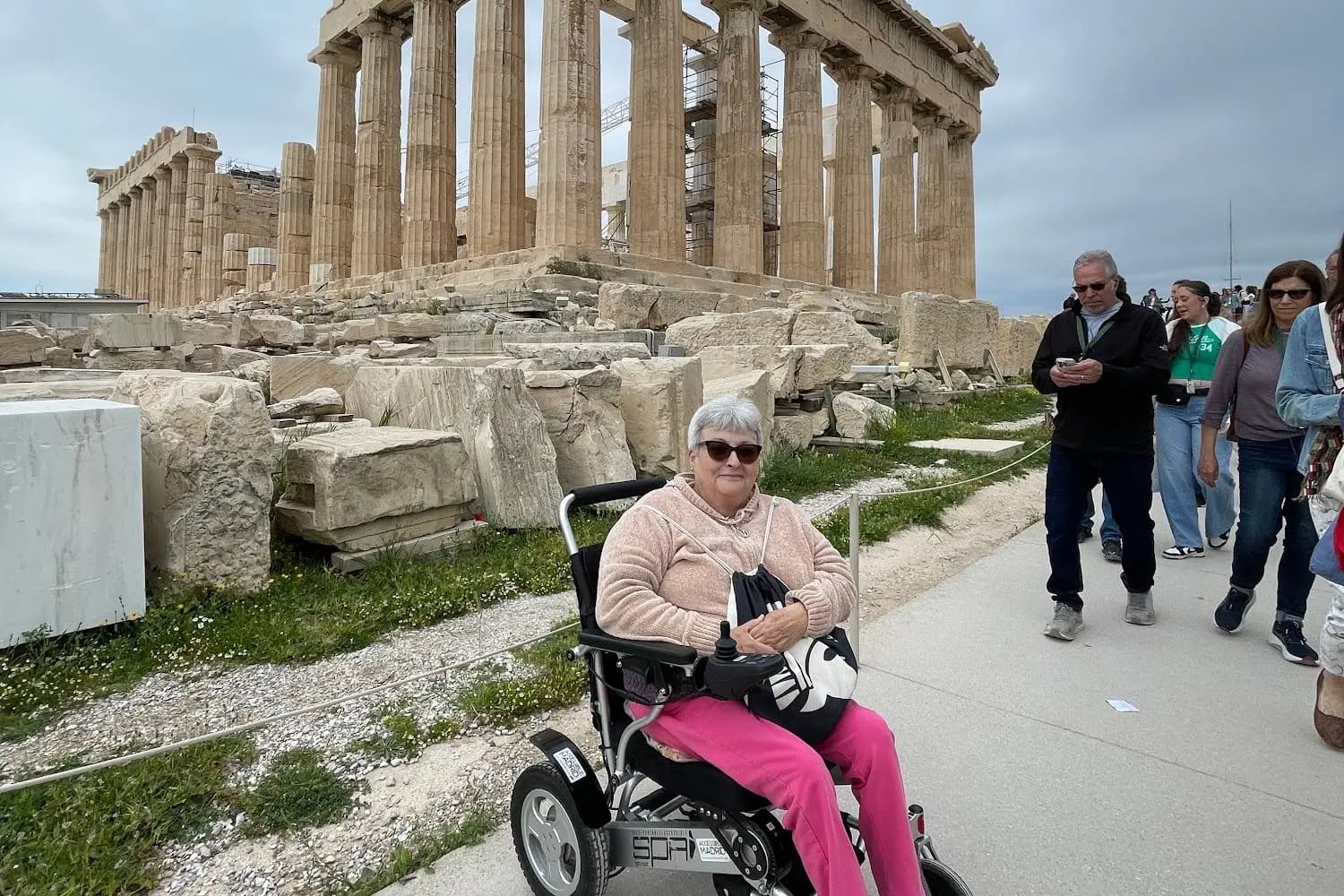
The Acropolis and the Parthenon
Climb the sacred hill and see the Parthenon up close, with Athens at your feet. As evening falls, the light is special and there are fewer people.

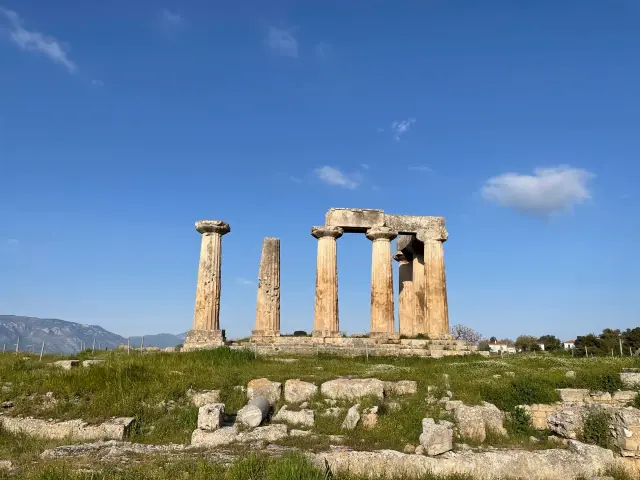
Accessible tourism in Greece
Experience the cradle of Western civilisation
We bet that the first time you come face to face with one of the ancient Greek temples and see it standing there, its sturdy Doric columns upright as if it had been built only recently, it will give you goosebumps. Seeing in person these remains of the cradle of Western civilisation is an experience that will not leave you indifferent.
Experience the settings that were home to some of the most representative figures of classical Western culture and of the myths of its literature. Thousands of years of history are laid out for those who visit this incredible destination of ruins and idyllic beaches.
As for accessibility, it is a bit of everything. Athens, the capital, is a place you can visit: there are accessible accommodation options and accessible activities for people who use a wheelchair. However, as you venture into the islands, accessibility becomes more limited.
Not so on islands such as Santorini and Crete, which offer accessible accommodation for people with disabilities and plenty of adapted activities.
Enjoy thousands of kilometres of Mediterranean coastline and get a tan on one of its islands while you learn about the roots of our civilisation. And lastly: do not miss the delicious, plentiful food of this ancient nation.
It is definitely a trip that will stay etched in your memory for ever. Are you in?
Start Athens at the top: climb the Acropolis first thing in the morning or as evening falls, when the light is special and there are fewer people. Then head down to lose yourself in Plaka and Monastiraki. Hungry? A tour of the Central Market, with olives, cheeses and baklava, or a dinner at a taverna in Plaka.
With a free day, a boat takes you across the Saronic Gulf to Hydra, Poros and Aegina. You spend a couple of hours on each island and, on Aegina, freshly picked pistachios.
Overland, Cape Sounion with the Temple of Poseidon above the Aegean, Delphi and its oracle, Olympia, where the Games were born, and the theatre of Epidaurus, famous for its acoustics.
For the finale, the islands: whitewashed houses on Paros and Mykonos, the Portara of Naxos, the caldera of Santorini. On Crete, the palace of Knossos and a beach day with no rush. And if you have an afternoon to spare, a retsina tasting among the vineyards of Attica.
Climb the sacred hill and see the Parthenon up close, with Athens at your feet. As evening falls, the light is special and there are fewer people.
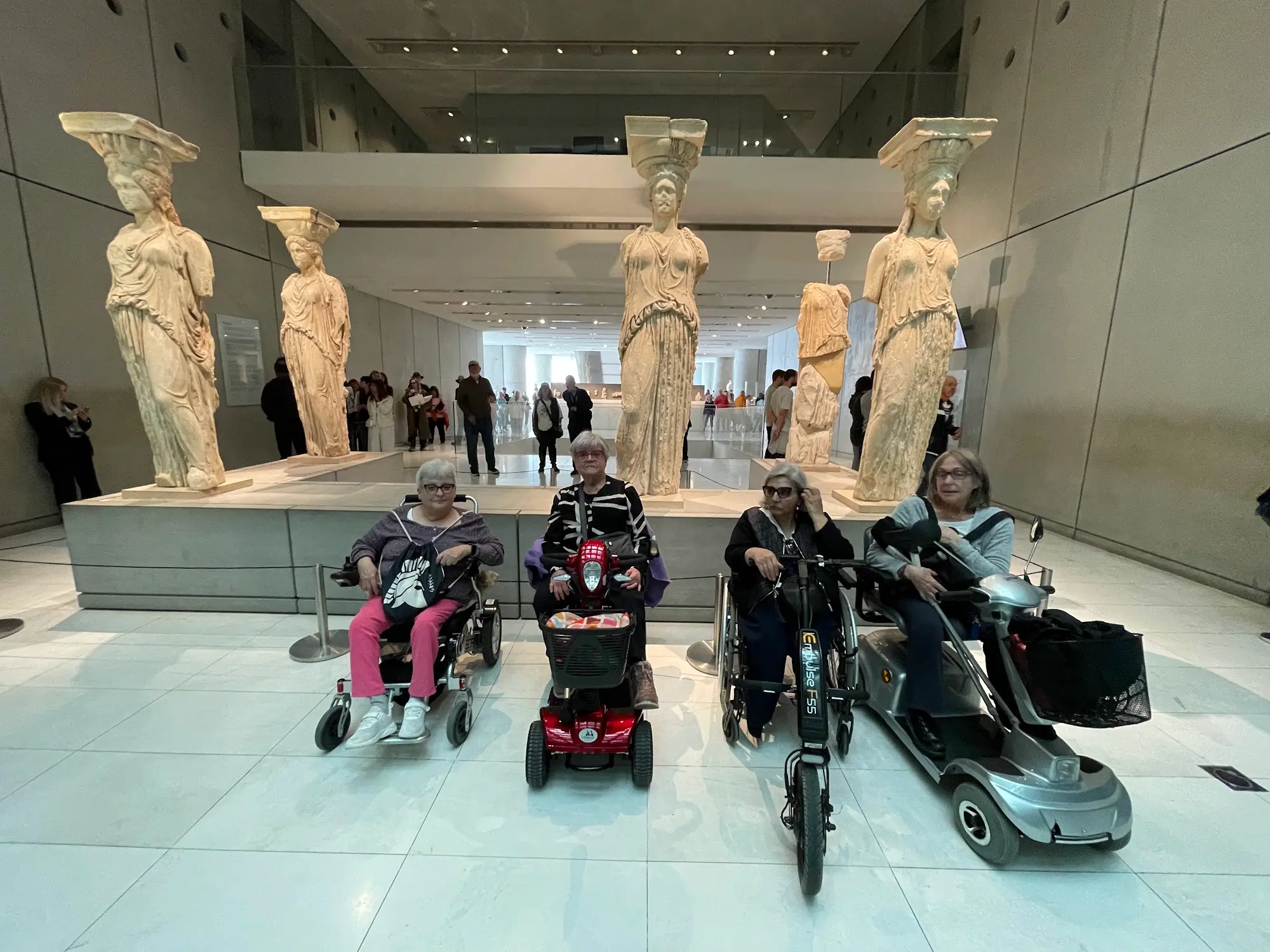
Tour the heart of public life in classical Athens, with the Temple of Hephaestus, and see sculptures, ceramics and pieces of gold in the museum.
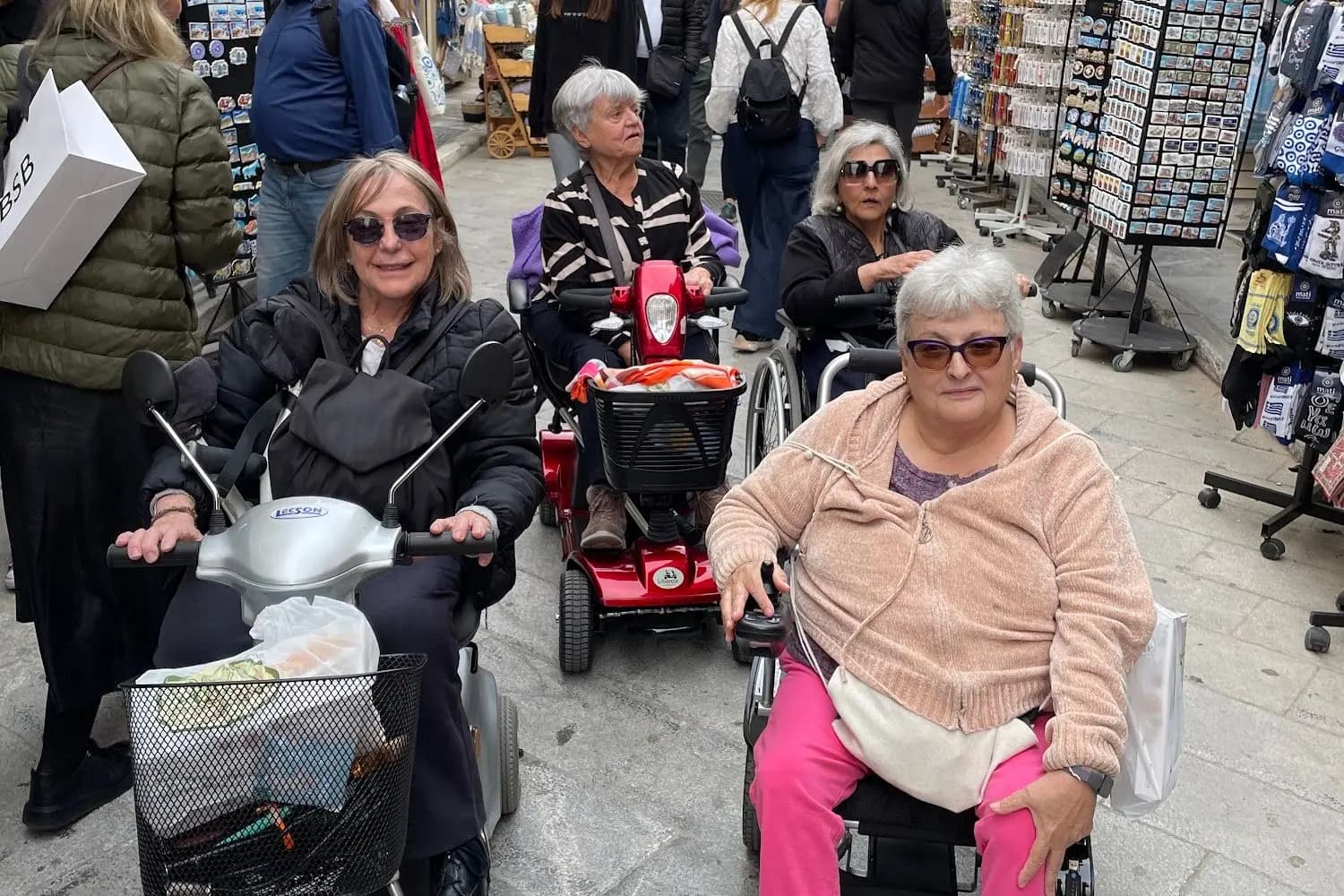
Wander without a rush through the lanes of Plaka, carry on to Monastiraki and watch the changing of the guard at Syntagma. Have dinner at a taverna in Plaka.
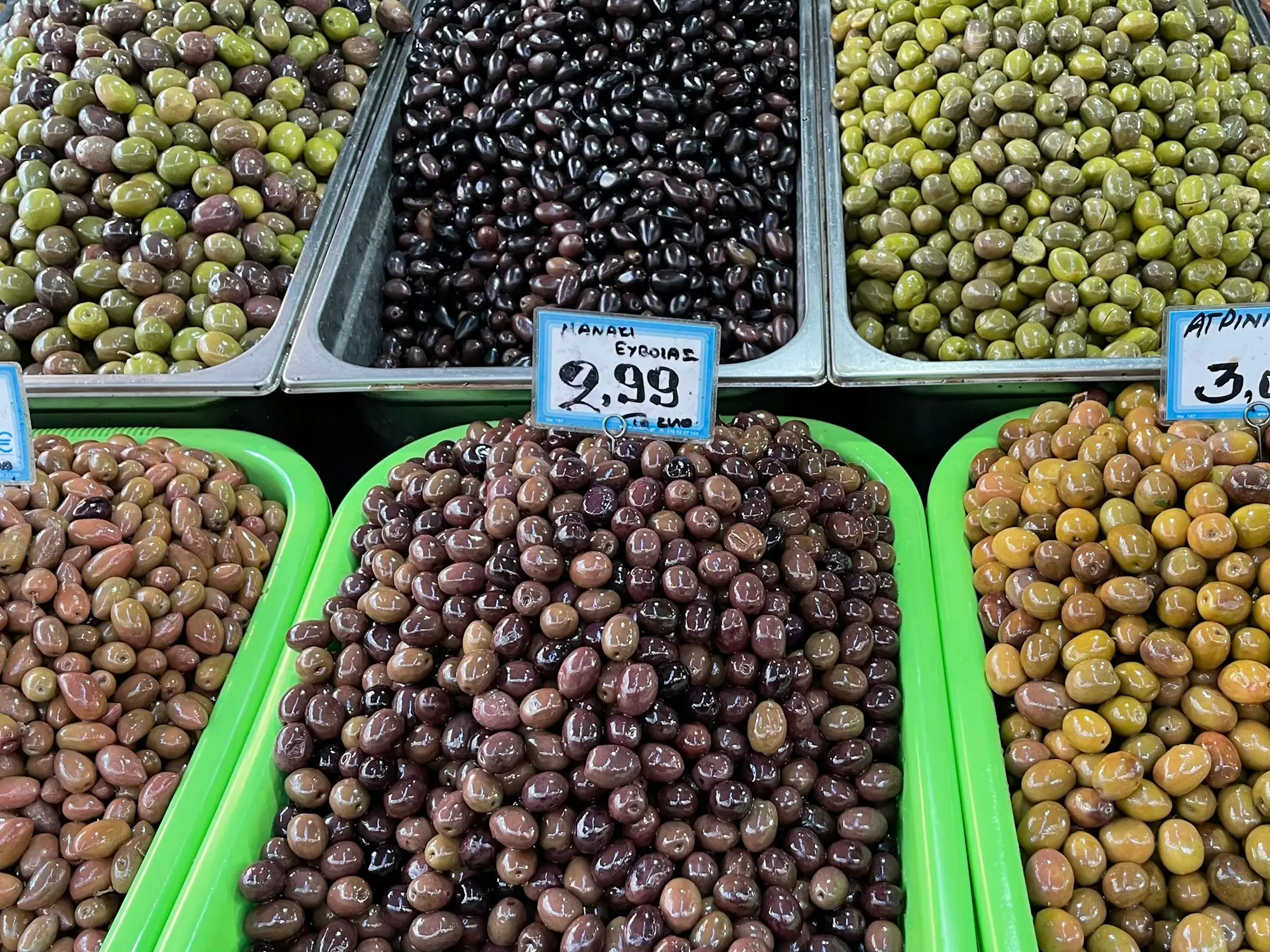
Try olives, cheeses, spices and fresh fish among the traditional markets, and sweets such as baklava, chatting with the traders.
Go to the tip of the cape, where the Temple of Poseidon rises above the Aegean. Then, wineries with retsina and the sanctuary of Artemis among vineyards.
Tour Meteora, where monasteries rise on enormous rock columns. Spiritual heritage and natural formations in a unique landscape.
Tour the sanctuary where the oracle of Apollo was consulted, with its theatre and the Castalian Spring, and the museum. In Arachova, grilled cheese at a taverna.
Stroll among the temples of Zeus and Hera and the ancient stadium where the Games were born, and step into the museum, which holds the statue of Hermes by Praxiteles.
Hear the acoustics of the theatre of Epidaurus, enter the citadel of Mycenae and the Treasury of Atreus, and wander without a rush through the old town of Nafplio.
Stroll among whitewashed houses on Paros and Mykonos, see the Portara, the marble gateway of Naxos, and look out over the caldera of Santorini from Fira and Oia.
Sail across the Saronic Gulf and step off on each island: stroll around Hydra, where there are no cars, try the pistachios of Aegina and tour the harbour of Poros.
Tour the ruins of the Minoan palace of Knossos, see the Minoan treasures in Heraklion and stroll through Rethymno, with its Venetian fortress. Finish with a beach day.
Climb the Acropolis to see the Parthenon with Athens at your feet, first thing in the morning or as evening falls. Tour the Ancient Agora, stroll through Plaka and Monastiraki and have dinner at a taverna among the lanes. For the sunset, Lycabettus Hill.
Go as far as Cape Sounion and see the Temple of Poseidon on the cliff, with the Aegean as a backdrop. Take a dip in the thermal lake of Vouliagmeni, taste retsina at a winery and lie on the beaches of the Riviera.
Tour Delphi, the "navel of the world" where the oracle guided destinies, at the foot of Parnassus. See the Temple of Apollo and, in the museum, the Charioteer. Then climb to Arachova, a mountain village of cobbled streets and tavernas where you can try grilled formaela cheese.
Visit the sanctuary where the first Olympic Games were held: the ancient stadium, the temple of Zeus and that of Hera, the workshop of Phidias. In the museum, see the Hermes of Praxiteles. And at an olive press in the area, oil and wine.
Look out over the Corinth Canal, step into the theatre of Epidaurus and hear its acoustics. Climb the citadel of Mycenae to the tomb of Agamemnon and finish in Nafplio, with its seafront and its old town of stately façades.
Stroll among whitewashed houses and bougainvillea in Naoussa and Lefkes, on Paros. On Naxos, go through Chora to the Portara. On Santorini, tour Oia and the old port of Ammoudi, with viewpoints over the caldera.
I'd like to plan my trip (opens in a new tab)
The Accessible Radar brings together what we know about the accessibility of each destination.
In the Radar, the cities in Greece we have the most information about are Athens, Chania, Heraklion, Santorini, Corfu, Rethymno, Rhodes and Crete.
Greece is best enjoyed in spring, in April and May, and in autumn, in September and October. The ruins are explored without the summer heat and the sun is still with you. In high summer the sea rules, and the Acropolis is best enjoyed first thing in the morning or as evening falls.
It depends on where you go. Athens is the easiest, with accessible accommodation and activities for anyone travelling in a wheelchair. On the islands accessibility is more limited and calls for more preparation. Santorini and Crete are the exception, with more options. Tell us how you get around and we will look together at what fits.
Start with Athens: the Acropolis and the Parthenon, the Ancient Agora and the lanes of Plaka. From there you can reach Cape Sounion, Delphi, Olympia and the theatre of Epidaurus, and the islands round it off with Santorini, Naxos, Paros, Mykonos or Crete.
A day by boat across the Saronic Gulf, with stops at Hydra, Poros and Aegina. Also Cape Sounion, to see the Temple of Poseidon above the Aegean, and Delphi and Arachova, at the foot of Parnassus. Further away are Olympia and the theatre of Epidaurus.
Tour the ruins of the Minoan palace of Knossos and see the treasures of the Archaeological Museum of Heraklion to understand Minoan civilisation. Then stroll through Rethymno, with its old town and its Venetian fortress, and leave a day for the beach.
In spring, from April to May, and in autumn, from September to October. It is less hot for touring ruins and temples, and the islands are enjoyed at an easy pace. In summer it is very hot: the Acropolis is best first thing in the morning or as evening falls.
When you know you want to travel, start here. If you're still finding out more, keep exploring: this website is designed to answer your questions.
Noa, our virtual assistant, will look after you: she listens to you, asks you a few questions and books you a call with someone from our team. Who is Noa?