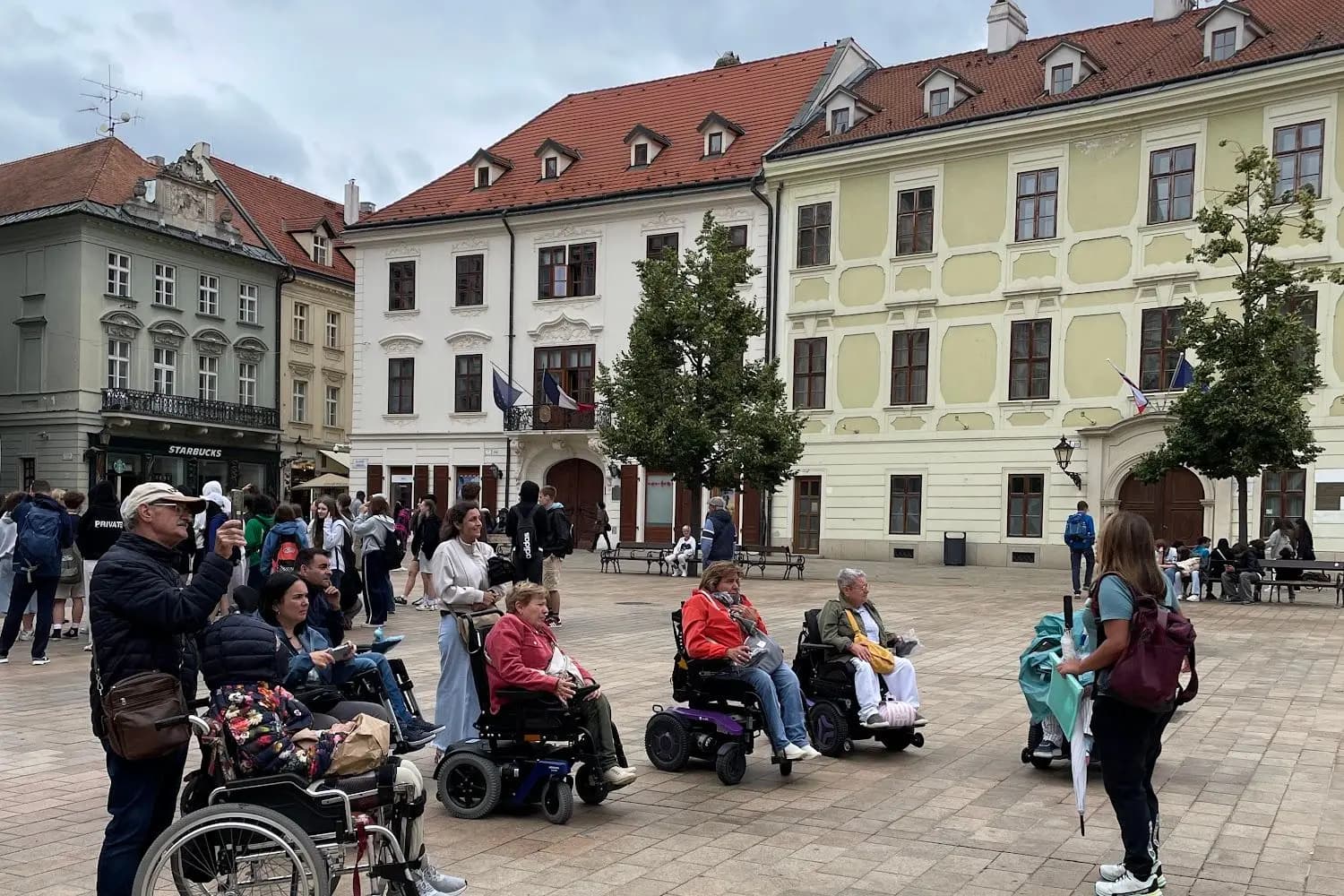
Bratislava Castle and Old Town
Go up to the castle that watches over the city and then lose yourself in the streets of the Old Town, with a stop at the Čumil sculpture.

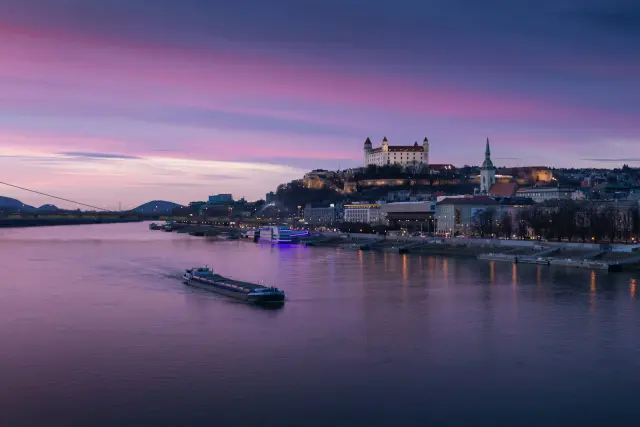
Accessible tourism in Slovakia
A small capital on the banks of the Danube
Slovakia is a country to explore without hurry, away from the big crowds. Its gateway is Bratislava, a small capital with cobbled streets, Baroque façades and squares where you feel like sitting down for a while.
Go up to the castle that watches over the city and look at the Danube from above. Then come down to the Old Town and let the streets lead you to Čumil, the sculpture peeking out of a manhole that almost nobody can resist photographing. At midday, a traditional terrace and a dish of local cuisine.
What you experience here is calmer than in other Central European capitals. It is a city you cross on foot or on wheels in a day, with time to look around. And since Slovakia calls for going slowly, we help you plan each stretch so that you enjoy it without rushing. Shall we start with Bratislava?
Start with Bratislava Castle, which overlooks the city and the Danube. From there, head down to the Old Town without hurry and explore it street by street, among Baroque façades and small squares.
Stop at Čumil, the sculpture peeking out of a manhole, and let it raise a smile. Go into St Martin's Cathedral, have lunch on a traditional terrace and linger over the after-lunch conversation.
It is a small-city plan: few things each day, with time to sit and look, and to walk or roll again.
Go up to the castle that watches over the city and then lose yourself in the streets of the Old Town, with a stop at the Čumil sculpture.
Bratislava is a small, quiet capital. Go up to the castle and look at the Danube from above, explore the Old Town at an easy pace among Baroque façades and go into St Martin's Cathedral. Look for Čumil, the sculpture peeking out of a manhole, and have lunch on a traditional terrace.
I'd like to plan my trip (opens in a new tab)
The Accessible Radar brings together what we know about the accessibility of each destination.
Slovakia is best enjoyed in spring and autumn, when Bratislava's streets can be explored in mild temperatures and without crowds. In summer there is more sun and more atmosphere on the terraces; in winter, more cold and short days.
It depends on the plan. Bratislava is small and is best planned calmly, with few visits per day. What calls for more preparation is the castle, at the top of the hill, and the cobbled streets of the Old Town. Tell us how you get around and we will assess each stretch together.
The castle, with views over the Danube, and the Old Town, with its cobbled streets, Baroque façades and squares. Nearby is the Čumil sculpture, and St Martin's Cathedral is worth a visit. It all fits into one relaxed day.
One day covers the castle, the Old Town and a meal on a terrace. With two days you can go more slowly and return to the corners you liked most.
In spring and autumn, with mild temperatures and fewer people. Summer is sunnier and livelier. Winter is colder, with short days.
When you know you want to travel, start here. If you're still finding out more, keep exploring: this website is designed to answer your questions.
Noa, our virtual assistant, will look after you: she listens to you, asks you a few questions and books you a call with someone from our team. Who is Noa?