What to see in Greece in a wheelchair: the places you can't miss
- Europe
- Greece
- Culture and art
- Beaches and islands
What to see in Greece in a wheelchair: a route that combines history, culture and Mediterranean landscapes, and what to bear in mind on the islands.
Accessible tourism in Greece, a destination waiting to be discovered
Greece, the cradle of Western civilisation and home to stunning landscapes, is a dream destination for many travellers. Its rich history, vibrant culture and beautiful natural surroundings offer a one-of-a-kind experience. If you use mobility equipment, don't worry: travelling to Greece in a wheelchair is entirely possible.
In recent years, Greece has improved its accessibility so that everyone can enjoy its wonders.
Although there is still work to be done, especially on the islands, here is an ideal route that combines history, culture and purely Mediterranean scenes. So, let yourself be swept away by some of the most iconic and accessible places in Greece!
Accessible places and activities in Greece
Athens: where history and modernity meet
Acropolis of Athens
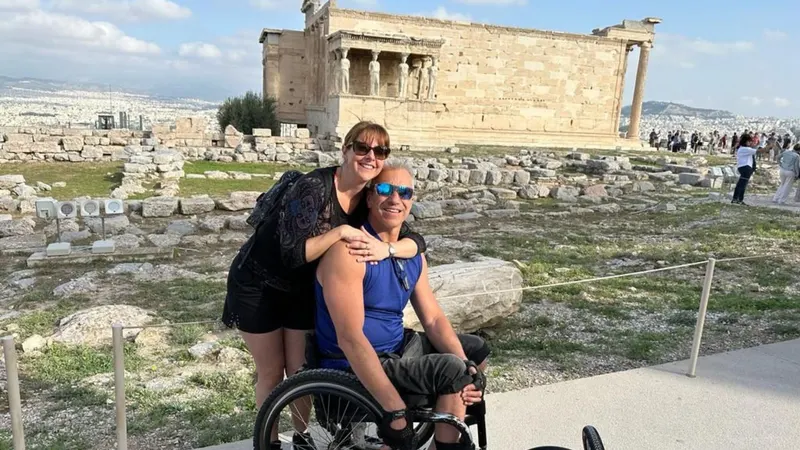
To begin with, your adventure at the Acropolis, the most iconic symbol of ancient Greece, is a must.
This historic site offers accessible entrances with ramps and lifts, allowing all visitors to enjoy the impressive views and the ancient ruins, including the Parthenon and the Erechtheion. In addition, the paved paths make getting around easier.
National Gardens of Athens
After your visit to the Acropolis, relax in the National Gardens of Athens. This green oasis in the heart of the city has paved paths winding between trees, ponds and statues.
That makes it a perfect place for a quiet stroll or a picnic. What's more, the shade of the trees and the peaceful atmosphere offer a break from the bustle of the city.
Temple of Olympian Zeus
Close to the gardens you will also find the majestic Temple of Olympian Zeus. Although not every path is perfectly accessible, a large part of the site can be explored without problems. This temple is also an impressive example of ancient Greek architecture, and its enormous columns offer a fascinating glimpse of Greece's glorious past.
Athens Central Market
Of course, for an authentic experience, visit the Athens Central Market. This bustling market is accessible and offers a fascinating look at daily life in Athens. Here you can try delicious local produce, from olives to cheeses and spices.
Chatting with the local traders will also let you learn more about Greek culture and culinary traditions.
Sailing around the islands of Poros and Hydra
By the way, board an accessible cruise from Athens and sail to the charming islands of Poros and Hydra. These islands are known for their crystal-clear waters and picturesque coastal towns.
Meanwhile, there are accessible boats for the journey, and many of the attractions on the islands are accessible. The hospitality of the locals will also make your visit even more enjoyable.
Crete: history and natural beauty
Heraklion
The city of Heraklion is an excellent starting point in Crete. For example, visit the Heraklion Archaeological Museum, which is accessible and houses an impressive collection of Minoan artefacts. The exhibitions are also designed to be accessible to all visitors, offering detailed information that is easy to understand.
Palace of Knossos
Of course, don't miss the Palace of Knossos, which has also improved its accessibility with ramps and paved paths. This archaeological site is famous for its Minoan ruins and will transport you to an ancient era full of mystery and culture. In addition, accessible guides are available to provide an educational and fascinating experience.
Rethymno
Explore Rethymno, a charming coastal town with cobbled streets and a Venetian fortress. Many areas of the town are accessible, and you can enjoy its vibrant atmosphere and beautiful scenery. The cafés and restaurants along the seafront also have ramp access, and you will find delicious dishes to sample the local cuisine.
Accessible beaches
Finally, Crete has several beaches adapted for wheelchair users, with walkways and accessible facilities so you can enjoy the sun and the sea. In addition, some beaches have amphibious wheelchairs for getting into the water.
Tips for travelling to Greece in a wheelchair
Lastly, before planning your trip to Greece in a wheelchair, it helps to know a few practical tips. First of all, the best time to visit Greece is in spring (April and May) and autumn (September and October). During these months the weather is milder and the temperatures are ideal for exploring the city comfortably.
These periods also avoid the intense heat of summer and the crowds of tourists, which can make getting around the city more difficult. Also bear in mind that some attractions can be more accessible and less crowded during the week, so planning your visit on weekdays could give you a calmer, more pleasant experience.
Finally, make sure you book in advance any accessible service you need, such as accessible accommodation and specialised transport.
At Travel Xperience we can coordinate all the accessible services you need so that you can enjoy a perfect experience.
First of all, thank you on behalf of Christian, Emilio and myself for looking after us throughout our trip, quickly sorting out the unexpected problems that always come up on a journey like this.
We enjoyed the trip enormously, and you definitely need experienced advice like yours to travel safely, knowing that every detail has been covered. It was a complex trip in terms of destinations, transit and airports, and it was solved in an unbeatable way! Athens, Mykonos, Santorini and Toledo!
We will be in touch again for the next one!
Mario S.
Read more testimonials from travellers…
Conclusion
Travelling to Greece in a wheelchair is entirely possible and absolutely rewarding.
Greece is a destination that perfectly combines history, culture and natural beauty, and it is becoming more and more accessible. From the majestic Acropolis in Athens to the impressive ruins of Knossos in Crete, there is plenty to discover and enjoy.
So, we recommend that you plan your accessible trip to Greece well in advance to make sure the accessible services are available. You can get in touch with us and, as always, Travel Xperience will prepare the itinerary that best fits your needs and, of course, your taste!
So don't hesitate, and get ready for an unforgettable experience in this fascinating country!
Come and get to know Greece, where ancient history meets modern beauty.
You can find out more about the destination on the Greek tourist office page (opens in a new tab)
Frequently asked questions
Is Greece an accessible country for people who use a wheelchair?
Yes, Greece has made significant progress on accessibility in recent years. Although some areas, especially the islands, are still improving, many of the main attractions and cities have accessible entrances for people who use a wheelchair.
What are the best times of year to visit Greece in a wheelchair?
The best times to visit Greece are in spring (April and May) and autumn (September and October). During these months the weather is milder and there are fewer tourists, which makes getting around easier and reduces the crowds.
Is there accessible public transport in Greece?
Yes, in the main cities such as Athens and Thessaloniki, many buses and the metro are accessible for wheelchair users. There are also wheelchair-accessible taxis and private companies that offer accessible transport. At travel Xperience we work with some companies that provide accessible transport as a private service.
Is the Acropolis of Athens accessible for people who use a wheelchair?
Yes, the Acropolis has significantly improved its accessibility. There are ramps and a special lift for people with reduced mobility, which lets you enjoy this iconic historic site without difficulty. Check whether the lift is working, as it is sometimes out of service for maintenance.
Can I find accessible accommodation in Greece?
Yes, there is a range of accessible hotels and accommodation in Greece. It is advisable to book in advance and to check the accessibility details directly with the hotel to make sure it meets your needs.
As anywhere in the world, we recommend that you follow up on your booking to make sure of your accessible room.
Which accessible attractions can I visit in Athens?
In Athens, besides the Acropolis, you can visit the National Gardens, the Temple of Olympian Zeus and the National Archaeological Museum, all of them with accessible entrances. The Athens Central Market is also accessible and offers an authentic experience.
How can I get around the Greek islands in a wheelchair?
Some islands, such as Poros and Hydra, are more accessible than others. It is advisable to research and plan in advance. There are also accessible cruises that let you visit several islands. At Travel Xperience we can offer you private accessible tours so that you can explore these and other Greek islands.
Are the beaches in Greece accessible for people with disabilities?
Yes, several beaches in Greece, especially in Crete, have walkways and amphibious wheelchairs to make access to the sea easier. It is advisable to ask at the local tourist offices for up-to-date information on accessible beaches. At Travel Xperience we will give you detailed information so that you can enjoy the beaches with complete peace of mind.
Is it possible to hire mobility equipment and assistive equipment in Greece?
Yes, there are some mobility equipment shops that hire out manual or powered wheelchairs, mobility scooters and walking frames. Some others also hire out assistive equipment such as profiling beds, hoists or commode chairs.
What medical services are available for wheelchair users in Greece?
Greece has a modern, accessible health system.
The main cities have well-equipped hospitals and clinics, and on the larger islands there are also medical centres able to deal with emergencies. In any case, when you travel with us, we offer you a 24/7 phone support service so that you can travel with peace of mind and have our support in case of any incident.
Published on .