Guide to travelling to Vienna in a wheelchair
- Europe
- Austria
- Culture and art
Travelling to Vienna in a wheelchair is possible. Find out about the transport, accommodation and accessible places to visit in the city.
Guide to travelling to Vienna in a wheelchair
If you would love to be travelling to Vienna in a wheelchair but don't know where to start planning your trip, welcome! In this new post on our blog, we'll tell you about this beautiful city and give you some tips on getting around with your mobility equipment.
That way, we're sure that once you've read it, you'll want to plan an unforgettable accessible trip to Vienna.
Vienna really does have it all: from palaces straight out of a film to majestic royal parks. With the right planning and the expert support of Travel Xperience, a trip to Vienna with reduced mobility can become a wonderful experience, full of unique and unforgettable moments.
Would you like to know more about this imperial city? Keep reading and get ready to fall in love!
Accessible Vienna: history, culture and accessibility in perfect harmony
Vienna, the capital of Austria, is a city that seems to have come straight out of a fairy tale. It is known not only for its imperial palaces, its elegant streets, the music of Mozart and its coffee-house tradition, but it is also one of those destinations that take your breath away.
What's more, you may not have known that it is also one of the best-prepared European cities for welcoming people with reduced mobility.
So, if you are thinking about travelling to Vienna in a wheelchair, the city has accessible transport and attractions that respect diversity.
How to get around Vienna in a wheelchair
Getting around Vienna for people with disabilities is surprisingly straightforward, as public transport has a high level of accessibility:
- Metro (U-Bahn): practically all stations are accessible and have lifts. However, it is advisable to check beforehand on the official website whether the lifts are working.
- Trams and buses: 90% of trams are low-floor, with fold-out ramps. As for buses, all of them are adapted.
- Trains and high-speed services: the main stations (Hauptbahnhof, Westbahnhof) have assistance, which should be requested in advance for a better service.
- Special transfers: local companies offer accessible minibuses for airport transfers and excursions. And of course, if you need a private transfer, you can count on Travel Xperience for that, as we'll take care of finding and booking the vehicle that best suits your needs.
As you can see, whether for short journeys or for travelling between cities, Vienna has accessible and safe options.
Where to stay: accessible hotels in Vienna
The range of accommodation in Vienna is wide and varied. Best of all, many hotels are adapted for people with reduced mobility. What can you expect to find? For example, step-free entrances, spacious lifts, large rooms where you can move around easily, bathrooms with level-access showers, grab rails and accessible washbasins.
In addition, many hotels are close to accessible public transport stations, which makes getting around the city even easier and helps make travelling to Vienna with reduced mobility more comfortable.
As you know, at Travel Xperience we look for the accommodation that best suits your needs, so if you want to travel to Vienna in a wheelchair and need accessible accommodation in Vienna, we're here!
As you can see, travelling to Vienna with reduced mobility is comfortable and straightforward. Let's carry on with a few more recommendations so that your accessible trip to Vienna is really complete
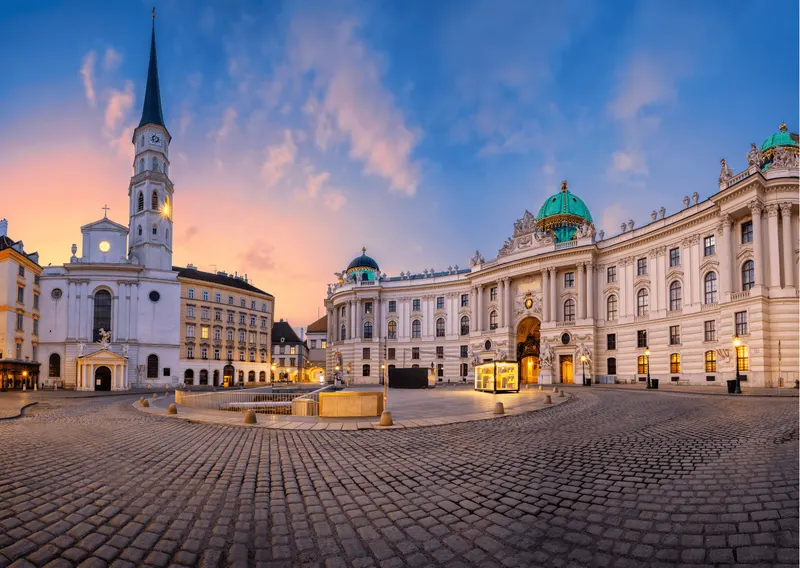
Hofburg Imperial Palace. Travelling to Vienna in a wheelchair
Main accessible attractions in Vienna
One thing that sets Vienna apart is that its cultural wealth is within reach of everyone. So that travelling to Vienna with reduced mobility is an enriching and complete experience, here are some of the must-see places for your trip:
Stephansplatz and St Stephen's Cathedral
This is the heart of Vienna. It is a vibrant square full of life, surrounded by shops, street performers and charming cafés. At its centre rises the majestic Cathedral, with its impressive roof of coloured tiles and a history that goes back to the twelfth century.
Fortunately, it has access for wheelchairs, and there are accessible toilets at the nearest metro station.
Albertina Museum
As well as being housed inside a genuine work of architecture, the museum holds one of the most important collections of graphic art in the world, including works by Monet, Picasso, Klimt and many more.
The building has lifts and accessible toilets, which makes it a must-see if you are travelling to Vienna in a wheelchair.
Belvedere Palace
This is a Baroque complex divided into the Upper and Lower Belvedere, surrounded by spectacular gardens that invite you to stroll at an unhurried pace. Inside, you can find the largest collection of works by Gustav Klimt, including his iconic painting “The Kiss”.
In addition, access is adapted and it is easy to get there by tram, which makes the visit much easier if you are travelling to Vienna with reduced mobility.
Schönbrunn Palace
It was the former summer residence of the Habsburgs, a historic jewel that still dazzles visitors today. On the one hand, its Rococo interiors have impressive decorative richness. On the other, the vast gardens around it make it an unforgettable visit.
Best of all, both the palace and its main paths are adapted for wheelchairs.
MuseumsQuartier
Here is one of the largest cultural complexes in the world, and undoubtedly one of the most vibrant in Vienna. Inside, you will find museums such as the Leopold, dedicated to modern Austrian art, the MUMOK, focused on contemporary art, and the Kunsthalle, with innovative exhibitions.
Likewise, the whole site is accessible and has accessible toilets, which makes it an excellent option if you are travelling to Vienna in a wheelchair.
Vienna State Opera (Staatsoper)
Undoubtedly a true cultural icon, where you can attend world-class opera and ballet performances that will leave you speechless. It also has side access for wheelchairs and offers personalised assistance for those travelling to Vienna with reduced mobility.
House of Music (Haus der Musik)
This is an interactive museum where you can explore the world of sound and music in a fun and stimulating way. It is also fully equipped with lifts, accessible toilets and accessible exhibits.
Spanish Riding School
Likewise, this institution, famous for its Lipizzaner horses, offers accessible performances and training sessions, with special access for people with reduced mobility. It is undoubtedly a unique experience that you shouldn't miss
Museum of Art History (Kunsthistorisches Museum)
Without a doubt, a jewel for lovers of classical art, with masterpieces by artists such as Rubens, Rembrandt, Velázquez and Vermeer. On top of that, the museum is adapted and has staff ready to help, which makes it highly recommended if you are travelling to Vienna with reduced mobility.
Sisi Museum
For its part, located in the imperial wing of the Hofburg Palace, this museum immerses you in the life of the legendary Empress Elisabeth of Austria, with an exhibition that includes personal belongings, dresses and portraits that tell her story in an intimate and moving way.
Likewise, the main areas of the museum are accessible by ramps and lifts, and a reduced entrance fee is offered to people with disabilities, which makes it an excellent option if you are travelling to Vienna in a wheelchair.
Café Sacher
And of course, this is the ideal place to try the famous Sachertorte in its place of origin, a true Viennese classic. Although the entrance is accessible, bear in mind that space can be rather tight at busy times, so we recommend visiting outside peak times to get the most out of the experience.
Naschmarkt
Last of all, there is Vienna's most popular market, a place full of flavours, colours and smells that stimulate all the senses. Thanks to its accessible layout, with more than 100 stalls and restaurants, you can get around it comfortably if you avoid peak times.
Accessible restaurants and food
When it comes to food, Vienna is full of charming restaurants and cafés that invite you to enjoy yourself without rushing. Although some places in the historic centre have steps, fortunately many others offer level entrances and enough space to move around comfortably.
You can also find everything from traditional Austrian cuisine to international, vegan or gluten-free options. As a precaution, it is always a good idea to call before you go to confirm access and accessible toilets, especially if you are travelling to Vienna with a disability.
For the first time we decided to take a trip that included several countries, something that worried us a lot because of taking several forms of transport, different hotels, hiring hoists and shower chairs, and so on. But once again, Travel Xperience showed us that they are there to take away all our worries and to show us that we can travel wherever we want.
When we arrived at the stations, the assistance staff were already waiting for us, and when we arrived at the hotels, the hoist and shower chair were already in the room, … In short! Since we got to know them we haven't stopped travelling, with the peace of mind of knowing that we are not alone.Alex & Sandra – Prague, Vienna and Budapest Circuit.Read more testimonials from our travellers on our website

Belvedere Palace. Travelling to Vienna in a wheelchair.
Extra services and useful tips
- Accessible public toilets: available in metro stations, museums and parks. You can also use the “Toilet Finder” app, or ask the staff if you need help opening them.
- Vienna City Card: offers free transport and discounts on attractions. But remember that people with disabilities have special conditions, so find out about them before you buy it.
- Weather: in winter there may be snow, but in summer the city shines, which is ideal for walks outdoors. However, if you prefer to avoid high season, late spring and early autumn can certainly be good options.
- Personalised help: you can request assistance at stations and the airport, or even book a wheelchair-accessible taxi; just remember to do so far enough in advance for everything to be properly coordinated.
Accessible services
At Travel Xperience, we design tailor-made trips, especially in destinations like Vienna, for people with disabilities or reduced mobility.
Our services are fully personalised to adapt to your needs. During the trip you have a 24-hour on-call phone line.
Get in touch with us and let us help you plan your trip.
Conclusion: accessible Vienna, a city to dream about
In short, Vienna is a city for anyone who enjoys art, music or simply strolling at an unhurried pace.
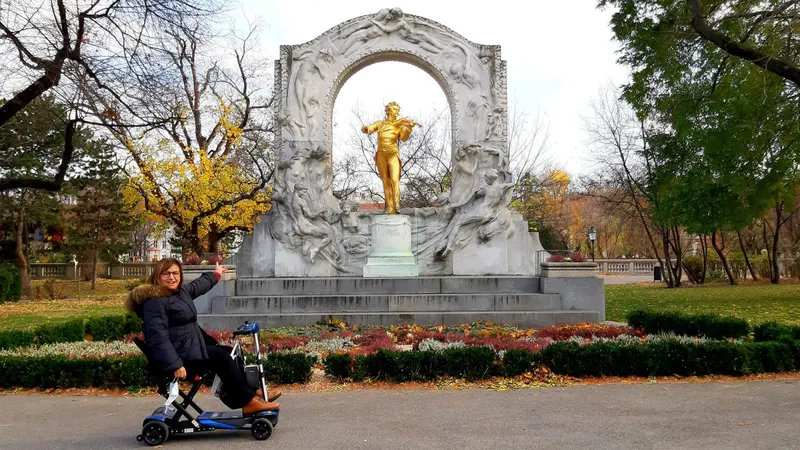
So, if you are planning your next getaway, travelling to Vienna in a wheelchair could well be one of your best decisions. Now all that's left is to pack your luggage, choose your favourite places and come and discover a Vienna for people with disabilities that will surprise you around every corner. See you among palaces, notes of Strauss and corners full of history!
At Travel Xperience we don't just create itineraries: we design personalised experiences so that your trip to Vienna for people with reduced mobility is comfortable, safe and at your own pace.
Our team takes care of transport, tickets, assistance and accommodation so that you can concentrate on enjoying Vienna in a wheelchair as it deserves. All set to explore Vienna?
Published on .