Everything you need to know about travelling to Budapest in a wheelchair and making the most of it
- Europe
- Hungary
- Culture and art
A guide to Budapest in a wheelchair: accessible transport, accessible accommodation and what to see. Watch out for the hills and cobbles on the Buda side.
In this guide, you will discover everything you need to know about travelling to Budapest in a wheelchair and making the most of it. We will also explore accessible transport options, accessible accommodation, tourist attractions and key recommendations for getting around the city.
Budapest, the majestic capital of Hungary, is a fascinating destination that combines history, architecture and culture on both banks of the Danube.
The city, divided into Buda and Pest, offers a unique experience for any traveller; however, if you use a wheelchair or have reduced mobility, it is essential to know the accessibility conditions so you can plan your route better.
In recent years, Budapest has made significant progress in inclusive infrastructure, improving public transport and adapting some of its main tourist attractions.
Nevertheless, certain areas, especially on the Buda side, can present challenges because of their terrain and cobbled streets. That is why it is essential to have up-to-date information and practical tips to enjoy this destination.
If you are looking for a destination rich in culture, with stunning scenery and increasingly accessible options, Budapest will surprise you. Get ready to discover the city!
Is Budapest an accessible city?
Budapest has made notable progress in accessibility in recent years, becoming an increasingly friendly destination for wheelchair users. However, like many European cities with an old historic centre, it still presents some challenges that are important to know about before travelling.
Progress in accessibility
Accessible public transport: The city has modernised much of its bus and tram network and some metro stations. This has made getting around easier for people with reduced mobility.
Attractions with adapted access: Landmarks such as the Parliament, St Stephen's Basilica and the Central Market Hall have installed ramps and lifts.
Accessible accommodation: In the Pest area, especially in the centre, it is easier to find accessible hotels with rooms and bathrooms designed for wheelchair users.
Challenges to bear in mind
Cobbled streets and slopes: On the Buda side, where Buda Castle and the Fisherman's Bastion are, the steep slopes and uneven paving can make getting around in a wheelchair difficult.
Partially accessible metro: Although Line 4 is fully accessible and part of Line 3 has been renovated, other lines still have architectural barriers.
Historic buildings with limited access: Some heritage sites, because of their age, have not yet been fully adapted to guarantee total accessibility.
Key tips for travelling to Budapest
- Plan ahead: Identify the most accessible routes and check the transport options before you set off.
- Make the most of the best-adapted areas: The Pest district is flatter and has better conditions for getting around comfortably in a wheelchair.
- Check the state of public transport: The app BKK FUTÁR (opens in a new tab) lets you check in real time which accessible trams and buses are running.
- Consider using wheelchair-accessible taxis: Although they are less common, booking in advance can make getting around the city easier.
With good planning and by choosing the right routes, travelling to Budapest in a wheelchair is a possible and enriching experience. So, throughout this guide, we will explore in detail how to get around the city, which accommodation to choose and which attractions to visit without worrying about architectural barriers.
Accessible transport in Budapest
Getting around Budapest in a wheelchair is possible thanks to the improvements made to its public transport system. Although accessibility is not total, there are adapted options that let you get around the city comfortably and safely.
Metro
The Budapest metro is one of the oldest in Europe and, despite having been partly modernised, still has architectural barriers at several stations.
Line 4 (green): It has lifts at every station. Incidentally, it is the best option for anyone looking to get around by metro.
Line 3 (blue): Being renovated. Several stations already have lifts, but some still have access difficulties.
Line 1 (yellow) and Line 2 (red): Mostly not accessible, as they have no lifts and many flights of stairs.
To check in real time whether the lifts are working and how accessible each station is, remember to use the BKK FUTÁR app.
Trams
The tram is one of the best ways to get around Budapest, as many lines have brought in modern vehicles with adapted access.
Lines 4 and 6: They have low-floor trams that make wheelchair access easier.
Line 2: Offers a scenic route along the Danube, passing the Parliament and the Chain Bridge. Not all the trams on this line are accessible, so it is advisable to wait for an adapted model.
Other lines: Several still run old trams with high steps, which makes them hard to use for people with reduced mobility.
Buses
Most buses in Budapest are accessible and have ramps and a reserved space for wheelchairs.
All the main lines include adapted vehicles.
The 100E and 200E buses, which connect the airport with the city centre, are accessible.
Stops in tourist areas are usually adapted with dropped kerbs to make access easier.
Wheelchair-accessible taxis
There are wheelchair-accessible taxis in Budapest, but their availability is limited.
- It is advisable to book in advance through specialist companies.
- It is important to confirm whether the vehicle has a ramp or a wheelchair lift, especially for those who use powered wheelchairs.
Funicular and sightseeing boat
- Buda Castle Funicular: Lets you reach Buda Castle without climbing steep hills. Although it is partially accessible, you may need assistance to get over a small step at the entrance.
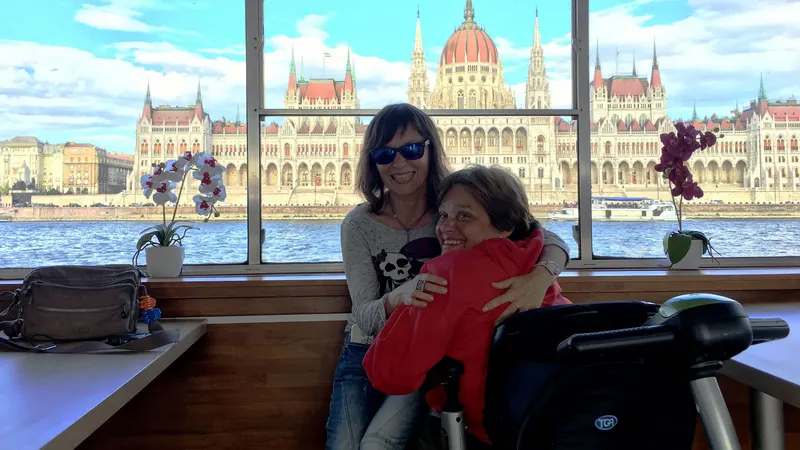
- Sightseeing cruises: The company Legenda City Cruises (opens in a new tab) operates accessible boats with ramps and accessible toilets. Above all, we recommend checking availability 24 hours in advance.
Tips for getting around Budapest
- Plan your routes in advance to avoid metro stations that are not accessible.
- Choose modern trams and buses, which offer better accessibility.
- Use the BKK FUTÁR app to check the state of the transport in real time.
- Book wheelchair-accessible taxis well in advance.
Taking these options into account, enjoying accessible tourism in Budapest is getting easier and easier. So, by choosing the right transport, it is possible to get around the city comfortably.
Accessible accommodation in Budapest
Certainly, choosing the right accommodation is a key aspect when visiting Budapest in a wheelchair. The accessibility of hotels varies by area, so it is essential to check the features of the establishment before making a booking.
The best areas to stay in
Pest: Without doubt the best option if what you are looking for is comfort and accessibility. Its streets are flatter, it has a wide range of accessible hotels and it is better connected to accessible public transport.
Andrássy Avenue: A central location, with modern hotels that usually have accessible facilities.
Parliament area: Ideal if you want to be close to tourist attractions and stay in adapted establishments.
Buda: Although it offers spectacular panoramic views, the terrain is more uneven and many streets are cobbled. Bear in mind that, if you choose this area, we recommend a hotel with access to accessible transport.
Key features of an accessible hotel
When booking accommodation in Budapest, it is important to confirm that the establishment has:
Accessible entrances: Ramps or level access.
Accessible rooms: Wide doors, enough turning space and beds at a suitable height.
Accessible bathrooms: Level-access showers, grab rails, a shower chair or shower seat and enough room to move around.
Spacious lifts: With wide doors and enough room.
Accessible communal areas: Restaurants, reception and rest areas.
Tips for booking an accessible hotel in Budapest
- Check the accessibility conditions directly with the hotel before booking.
- Choose accommodation in Pest to make getting around easier.
- Check how close it is to accessible transport stations.
- Go for hotels with accessibility certifications or good references from other people with reduced mobility.
Hello Travel Xperience team! I wanted to let you know my impressions of the trip to Budapest. The hotel was fine, the only thing I missed was a little fridge in the room, and the ramp in the bathroom was more than I needed, but otherwise fine. Jorge, the guide, was very good; he reworked the itinerary to include the two requests I made on the spot.
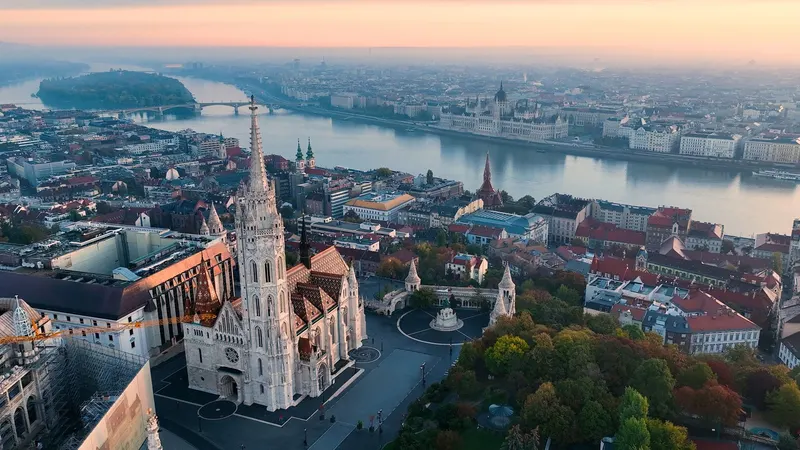
The Cave Church on Gellért Hill and St Matthias Church (outside and inside), at the Fisherman's Bastion. In the five days we saw all the main highlights of Budapest, both outside and inside: the Basilica and the Great Synagogue, plus we did a tour of the whole Jewish Quarter, the New York Café and Gerbeaud, the Duna Palota theatre with a show of traditional Hungarian dance and music, the Opera (although it was being renovated) and even a night cruise with the Legend Danube.
We wandered along the shopping street and others whose names I can't remember right now; we also went to a ruin pub; and to the Central Market Hall, where we ate goulash while listening to live violin music. We also visited the Parliament (inside and out).
And I'm not sure whether I've left anything out. It was all great.Thank you so much for everything!Eulalia Romeu
Accessible tourist sites in Budapest
Budapest is a city with an enormous cultural and architectural heritage. In recent years, many of its attractions have been adapted to improve accessibility, although some still present challenges. Below is a list of the main tourist sites and their level of accessibility.
Fully accessible attractions
These places have ramps, lifts and adapted access, which makes visiting in a wheelchair easier.
Budapest Parliament: Has access via ramps and lifts inside. In any case, we recommend booking in advance and asking about the assistance available.
St Stephen's Basilica: The main entrance has steps, but there is an alternative adapted access. It also has a lift up to the dome.
Hungarian National Museum: Offers lifts and adapted facilities for visitors with reduced mobility.
Central Market Hall: Has entrances with ramps and lifts to reach the different levels of the building.
Andrássy Avenue and Heroes' Square: These are pedestrian areas with wide, accessible streets, ideal for exploring in a wheelchair.
Partially accessible attractions
Some of these sites have been adapted; however, they may present certain architectural barriers.
Buda Castle: We recommend getting there by funicular or wheelchair-accessible taxi, as the cobbled streets can make the route difficult. On the other hand, inside the castle there are lifts to reach some areas.
Fisherman's Bastion: Has some ramps, but there are areas with stairs and no accessible alternative.
Széchenyi Baths: Has accessible changing rooms and hydraulic chairs to make getting into the pools easier, although access to some areas of the complex can be complicated.
Great Synagogue of Budapest: The main entrance has steps, but there is an adapted side access.
Hungarian State Opera: Since its renovation, its accessibility has improved, although we recommend letting them know in advance if you need assistance.
A “secret”: don't miss the restaurant Urban Betyár (opens in a new tab) and, using the lift, go down to level -1, where you will find an exhibition of typical Hungarian items that are unique in the city.
Recommended accessible experiences
As well as the classic attractions, there are experiences that can be enjoyed in Budapest.
Tram 2: Offers a scenic route along the Danube, with views of the Parliament and the Chain Bridge. Some of the line's vehicles are accessible.
Boat trip on the Danube: The company Legenda City Cruises offers adapted boats, with access via ramps and accessible toilets.
Margaret Island: A green space ideal for exploring in a wheelchair, with paved paths and accessible internal transport.

Final tips for an accessible trip to Budapest
If you want to travel to Budapest in a wheelchair, it is essential to plan ahead. Although the city has made progress in accessibility, some aspects can make all the difference to the travel experience if you travel with reduced mobility.
1. Choose the best time to travel
Certainly, the most recommended seasons for a trip to Budapest if you are a person with reduced mobility, are spring and autumn. During these months, the temperatures are more pleasant and there are fewer tourists, which will make getting around easier for you.
In winter, snow and ice can make moving around harder for you, while in summer the high temperatures can make some routes more demanding.
2. Book accessible transport and accommodation in advance
- Transport: Budapest has modern adapted buses and trams, but it is advisable to check in advance which lines are accessible and, in addition, you can use the BKK FUTÁR app to check the state of public transport in real time. If you need a wheelchair-accessible taxi, it is best to book it in advance.
- Accommodation: We recommend choosing hotels in the Pest area, where the terrain is flatter and there are more accessible accommodation options. It is also important to contact the establishment to confirm the accessibility conditions before making the booking.
3. Plan accessible routes and alternatives
In recent years, accessible tourism in Budapest has improved, but some areas still present difficulties. To avoid obstacles along the way, we advise you to:
- Give priority to accessible trams and buses, which will let you get around more comfortably.
- Avoid cobbled streets and steep slopes in the Buda area, opting for the funicular up to Buda Castle or wheelchair-accessible taxis.
- Identify the attractions with adapted access and check the accessibility maps before you set off.
4. Buy transport cards to make getting around easier
If what you are looking for is convenience when getting around, there are several transport card options:
- Budapest Travel Card: Allows unlimited travel on buses, trams and metro, including the adapted services.
- Budapest Card: As well as free transport, it offers discounts at various attractions, many of them accessible.
5. Avoid peak times on transport and at attractions
We recommend visiting the tourist sites early in the morning or late in the afternoon, when there are fewer visitors. It is also a good idea to avoid the busiest times on public transport.
6. Contact assistance services
If the trip includes travel by plane or train, it is important to request assistance in advance.
- Budapest Airport (BUD): Has special services for passengers with reduced mobility, which must be requested at least 48 hours before the flight.
- Train stations: Some have assistance for people with disabilities, although it is advisable to confirm availability before the trip.
Adapted services
At Travel Xperience, we design tailor-made trips, especially in destinations like Budapest, for people with disabilities or reduced mobility.
Our services are fully personalised to adapt to your needs, and our team is available 24 hours a day to give you the support you need at every step of your trip.
Get in touch with us and let us help you plan your tailor-made trip.
Conclusion
The Hungarian capital has become an increasingly accessible destination for people with reduced mobility. With improvements to public transport, accessible accommodation and many accessible attractions, the city lets you enjoy its history, culture and architecture in greater comfort.
Despite some challenges, such as the cobbled streets in certain areas, Budapest keeps moving forward in accessibility and offering inclusive experiences.
The Hungarian capital is a place full of charm that deserves to be explored calmly and at your own pace. If you are thinking about your next destination, travelling to Budapest in a wheelchair is an option that combines accessibility with incomparable cultural richness.
We'll help you make it happen. Start planning your trip and discover everything Budapest has to offer. Your next adventure awaits!
Published on .