Travelling to Sardinia in a wheelchair: an island between the sea and inclusion
- Europe
- Italy
- Beaches and islands
A guide to travelling to Sardinia in a wheelchair: beaches, culture and accessible services on an island committed to inclusion.
With its mix of wild nature, ancient history and dreamy beaches, Sardinia is establishing itself as one of the most promising destinations in the Mediterranean when it comes to accessibility.
Its mountainous terrain and charming historic centres can present a few challenges, but more and more corners of the island are being adapted so that travelling in a wheelchair is not only possible, but deeply rewarding.
From beaches with amphibious wheelchairs to accessible archaeological sites and museums, Sardinia shows that inclusive tourism is not an exception but a real commitment. So, with a little planning and a real appetite for adventure, this island welcomes you with open arms.
In this guide, we tell you everything you need to know to plan your trip to Sardinia in a wheelchair or with reduced mobility and enjoy every moment with freedom and peace of mind. Ready? Let's go!
Accessibility in Sardinia: an island that opens paths
Sardinia, the second-largest island in the Mediterranean, is moving with determination towards a more accessible and inclusive model of tourism. Its geography does present certain challenges -such as hills, historic villages and remote beaches-, but more and more municipalities, beaches and cultural spaces are working to adapt and open up to everyone.
From well-prepared airports to accessible transport services and mobility equipment hire, the island puts plenty of resources within your reach for your travels.
That is why travelling to Sardinia in a wheelchair is not only possible, but highly recommended if you follow a few practical tips like the ones we share below.
Accessible transport in Sardinia
Getting around Sardinia in a wheelchair is possible, although it takes some advance organisation. The airports of Cagliari, Olbia and Alghero offer free assistance for passengers with reduced mobility, and the terminals are well equipped with accessible toilets, lifts and suitable signage.
You can also count on other accessible transport, which we detail below:
- Public buses: Bus companies such as ARST have vehicles with ramps on some urban and intercity routes in the main cities, but not all lines are adapted, so check the accessible lines and stops in advance.
- Wheelchair-accessible taxis: There are taxi services with vehicles equipped with ramps and enough space for wheelchairs. By the way, it is advisable to book ahead, especially in high season, to make sure a vehicle is available and avoid setbacks.
- Adapted vehicle hire: A great option for those who want to explore the island at their own pace is to hire an adapted vehicle without a driver, as some companies offer cars adapted for driving or fitted with a lift, ideal for travelling with complete independence.
Streets and pavements in Sardinia
When it comes to getting around town, the pavements and streets of Sardinia vary in how accessible they are. On the one hand, in the more modern or recently renovated areas of cities such as Cagliari, Olbia and Alghero, it is common to find wide pavements, well-made dropped kerbs and even paving that makes getting around easier.
On the other hand, in historic centres and older streets, the cobbles and steep slopes can be a challenge, especially without assistance or a wheelchair with all-terrain wheels.
Even so, it is worth noting that local authorities are increasingly committed to improving urban infrastructure, applying universal accessibility criteria in their renovation and urban planning projects.
Accessible accommodation in Sardinia
As for accessible accommodation in Sardinia, you will find that cities such as Cagliari, Olbia or Alghero offer a growing choice of 4- and 5-star hotels and resorts with accessible rooms. Many of them have level-access showers, ramps, lifts and accessible communal areas, which makes the stay easier.
Some complexes also offer additional services, such as wheelchair or mobility scooter hire. That said, it is always advisable to confirm in advance both availability and the specific features of the accommodation or any equipment you may need.

“Cagliari took us by surprise from the very first moment”“My partner and I decided to get away for a few days to Cagliari without great expectations, just wanting to switch off. But what we found was so much more: a lively, friendly and surprisingly accessible city. The agency took care of everything: they booked the flights and arranged the assistance I need and the transfers to the hotel. We stayed in an accessible hotel very close to the centre where we felt very comfortable.As well as strolling around the centre of Cagliari, we took a trip to Nora and the sound garden, which was really interesting, and we had time for a beach day. We came home refreshed and eager to plan our next destination, this time a longer getaway. It was our first time travelling with Travel Xperience and it will definitely be the first of many!”– Lola and Javier, Madrid
Main accessible attractions
As for its attractions, Sardinia is a fascinating destination that combines history, culture and truly unique natural landscapes. Although some places can present certain challenges in terms of accessibility, the island has made remarkable progress so that more and more people can enjoy its tourist riches.
So here is a selection of the main accessible places you can't miss on your visit to Sardinia.
Cagliari: history, sea and accessible culture
Without a doubt, the Sardinian capital is the best starting point for exploring the island. Despite its steep streets, Cagliari has made a great effort to adapt:
- Bastion of Saint Remy: one of the city's most iconic monuments, with impressive views from its terrace, which can be reached by lift from the street.
- National Archaeological Museum: home to a large collection of Nuragic and Roman art. It has ramps, lifts and accessible toilets.
- Nora archaeological site: an ancient Phoenician and Roman city by the sea which, although its terrain presents some difficulties, allows accessible visits in certain areas and has accessible toilets.
- Pinuccio Sciola Park: an open-air art space where the sculptures “sing” when touched. Accessible and rich in sensory experience.
- Poetto Beach: this long urban beach is perfect for spending the day by the sea, as it has walkways, amphibious wheelchairs and accessible transport (such as the Progetto Sole service), making it one of the best accessible beaches in Italy.
Alghero: living history by the sea
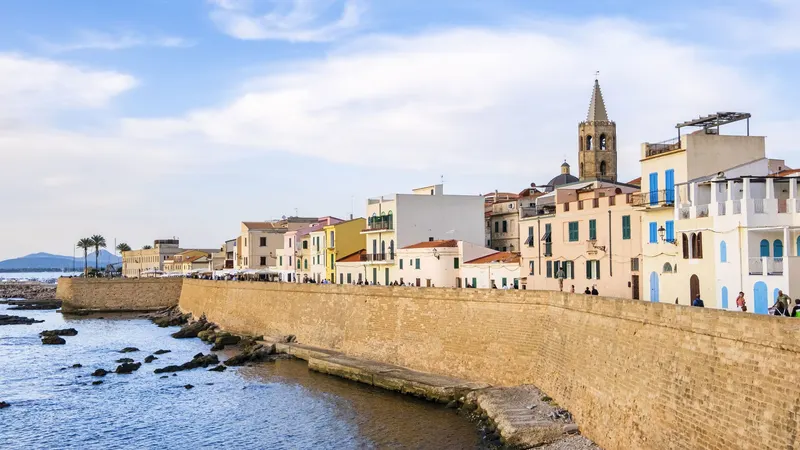
It is worth noting that Alghero, besides keeping its charming medieval air intact, has opened its doors to accessible tourism, adapting many of its spaces so that everyone can enjoy its history, its coast and its vibrant local life.
- Old town: a tangle of cobbled streets full of charm and life. Although it has some stone-paved areas, much of it can be explored with assistance.
- Coral Museum: dedicated to one of the city's most deep-rooted traditions, it can be visited with full accessibility and is well worth it to learn about this local craft.
- Alghero Archaeological Museum: brings together finds from different historical periods of the region. It is adapted with ramps and wide spaces.
- Maria Pia Beach: one of the most pleasant urban beaches in the area, surrounded by greenery and easy to enjoy because it has walkways and an amphibious wheelchair, ideal for relaxing after a day of exploring.
Olbia and surroundings: history, art and sea
Olbia is not only one of the main gateways to the island, whether by air or by sea, but also stands out for its accessible infrastructure, which makes it easier to get around and enjoy its main attractions.
- Basilica of San Simplicio: a small eleventh-century Romanesque church, a symbol of the city, with easy access for wheelchair users.
- National Archaeological Museum of Olbia: a modern cultural space located on a small island in the port, with very visual exhibitions.
- Cala Brandinchi: known as “little Tahiti” for its white sand and crystal-clear water, it is one of the most beautiful and accessible coves on the island, with support staff and accessible services.
Oristano: culture and history in the west
We end our guide in Oristano, a city that is perhaps less touristy than other parts of the island, but no less special for that. Full of charm, history and heritage, this town in western Sardinia also offers accessible options that deserve to be discovered at a leisurely pace.
- Oristano Cathedral: an imposing Baroque church with Gothic details inside. Partially accessible, with an accessible entrance and a spacious interior.
- Tharros archaeological site: an ancient Punic and Roman city by the sea, with accessible paths in certain areas and spectacular views of the Mediterranean.
Tips for travelling to Sardinia in a wheelchair
Bear these tips in mind:
- Planning comes first!: book accessible transport and accommodation in good time.
- Transport: the airports are accessible, and in the main cities there are wheelchair-accessible taxis and adapted buses (although availability is limited).
- Streets and old towns: in areas such as the Castello district (Cagliari) or the centre of Alghero, it is best to have assistance or all-terrain wheels for your wheelchair.
- Beaches and attractions: check whether an amphibious wheelchair is available and whether you need to book. In high season, some services can get overloaded.
- Best time to travel to Sardinia: the best time to visit Sardinia is in spring (April and May) and autumn (September and October). However, if you are looking to enjoy its beaches, bear in mind that assisted bathing and amphibious wheelchairs are usually available between June and September.
Finally, remember that booking in advance any accessible service you need -such as accessible accommodation, specialised transport or equipment hire- is key to making sure your stay is well prepared. At Travel Xperience we are here to help you coordinate your trip to Sardinia.
Travel Xperience: we design your accessible trip
At Travel Xperience we design tailor-made trips for people with disabilities or reduced mobility, and we take care of flights with special assistance arranged, accessible transfers, accessible accommodation and private tours.
We will also give you detailed information on the best accessible places in Sardinia, as well as the option of hiring mobility equipment if you need it. And so that you never lack support during the trip, we have a 24/7 phone support service, which will be with you every step of the way and sort out any unexpected problem.
In short, if you trust us to design your trip, you will find that getting around Sardinia in a wheelchair or with reduced mobility is not only possible, but comfortable, safe and unforgettable.
Conclusion
Sardinia is a Mediterranean jewel that is steadily making its way towards inclusion. Travelling around this island is not only possible, but deeply enriching.
Here, every step taken towards accessibility is also a gesture of hospitality, respect and openness to others. Discovering its history, tasting its cuisine and letting its landscapes embrace you becomes an experience that everyone should be able to enjoy.
At Travel Xperience, we help you make your dream of travelling come true. We take care of planning accessible routes and 24/7 assistance during your trip.
All set to discover Sardinia with proven accessibility?
Get in touch today and let's start designing the perfect adventure together.
Published on .