What to see in Belgium in a wheelchair: Brussels, Bruges, Ghent and Antwerp
- Europe
- Belgium
- Culture and art
- Food and wine
What to see in Belgium in a wheelchair: a guide to Brussels, Bruges, Ghent and Antwerp, with the train linking them and frequently asked questions.
Belgium in a wheelchair: four cities to explore
Have you always dreamed of exploring European cities full of history, art and good chocolate, but worry about accessibility? Then you'll be glad to know that Belgium in a wheelchair is not only possible, but surprisingly easy and enjoyable.
In this guide, we show you how to explore Brussels, Bruges, Ghent and Antwerp, four Belgian gems that are ideal for people with reduced mobility.
What's more, thanks to the country's compact size, its efficient rail connections and the backing of experts such as Travel Xperience, this adventure can become a truly transformative experience.
So, if you're looking for an accessible break in Europe, Belgium in a wheelchair may be exactly what you need. Here's how to make it happen
Brussels: an accessible, vibrant capital
To begin with, let's talk about the capital. Brussels, beyond being the seat of the European Union, is a diverse, cosmopolitan city full of life. In fact, every corner offers something unique: from colourful markets to world-class museums. As you explore it, you'll discover a city that knows how to blend its rich history with a vibrant modernity.
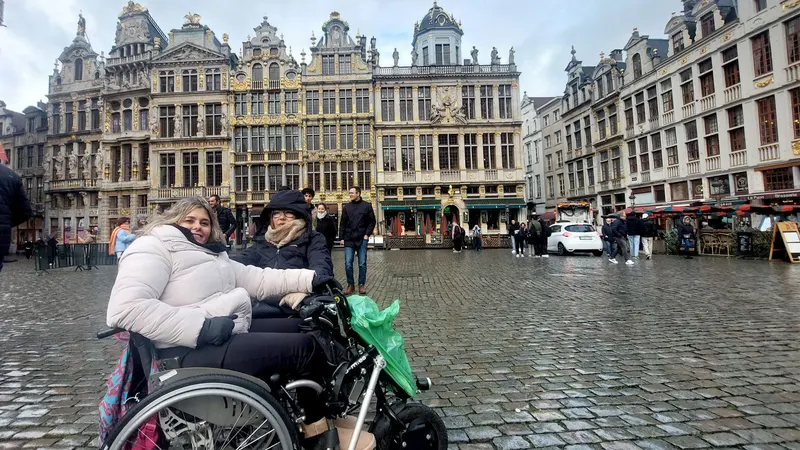
As for accessibility, it has improved considerably in recent years. For example, in the historic centre you can enjoy the Grand Place without major obstacles. Although some streets are cobbled, there are alternative routes and smooth surfaces for getting around.
Likewise, public transport (STIB) includes accessible trams and buses; in addition, many metro stations have lifts. All of this makes Brussels an excellent base for exploring the rest of the country.
Must-sees in Brussels if you travel in a wheelchair
- Grand Place: Although the ground is cobbled, you can move around comfortably along the flat sides.
- Atomium: It has ramps, a spacious lift and accessible toilets.
- Magritte Museum: It has lifts, clear signage and inclusive toilets.
- Cinquantenaire Park: Thanks to its wide, level paths, it is perfect for a stroll.
- Manneken Pis: It is in an easily accessible pedestrian area; even so, it is best to avoid peak times.
Bruges: a fairy tale within everyone's reach
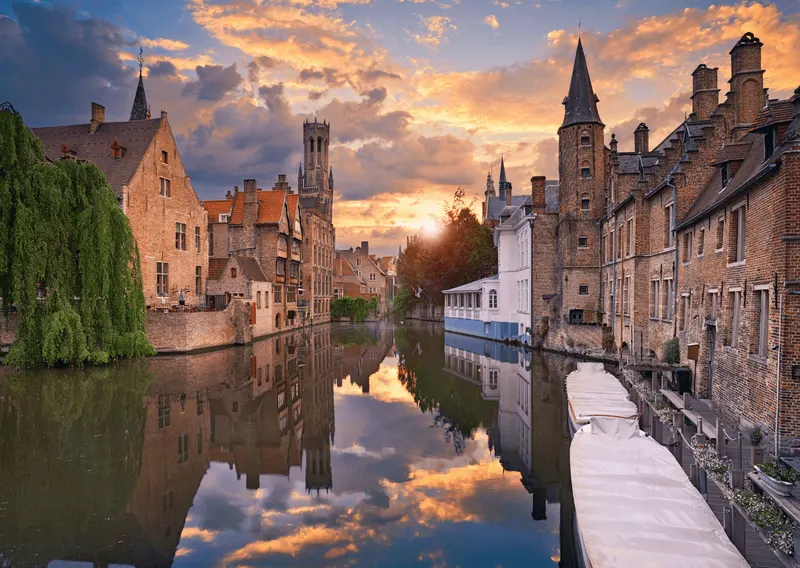
Few European cities win hearts as quickly as Bruges. This is because its canals, cobbled squares and medieval houses look like something from a postcard. However, the best part is that it can also be fully enjoyed in a wheelchair.
Although its historic architecture might seem like an obstacle, the reality is quite different. In fact, with proper planning and an accessible route, exploring Bruges in a wheelchair becomes a comfortable and highly recommended experience.
Despite the cobbles in some areas, there are smooth, accessible paths that let you explore it with complete peace of mind.
In addition, many of its best-known attractions have been adapted so that anyone can enjoy them, which reinforces the city's commitment to inclusion.
Must-sees in Bruges if you travel in a wheelchair
- Grote Markt: A wide square, accessible along paved edges that make it easy to get around.
- Gruuthuse Museum: It has lift access and trained staff to assist.
- Beer Museum: Spacious rooms and inclusive technology that enrich the visit.
- Choco-Story: Street-level entrance and accessible toilets. Ideal for chocolate lovers.
- Bruges Beguinage: Flat areas, shade and a peaceful atmosphere that invite you to relax.
All in all, Bruges lets you experience history, in a setting where the medieval and the modern live side by side in harmony.
Ghent: culture and accessibility go hand in hand
Ghent is a gem that surprises without making too much noise. Not only does it offer a perfect balance between Flemish history and youthful spirit, but it also has modern infrastructure that makes getting around easier, even for wheelchair users.
In fact, the city's trams are accessible, and its centre has many ramps, as well as flat areas that make exploring comfortable. For this reason, Ghent is an ideal choice for those looking for authenticity.
Accessible places in Ghent you can't miss
- St Nicholas' Church: Ramped entrance and spacious interior.
- St Bavo's Cathedral: It has accessible entrances and visual aids for an inclusive experience.
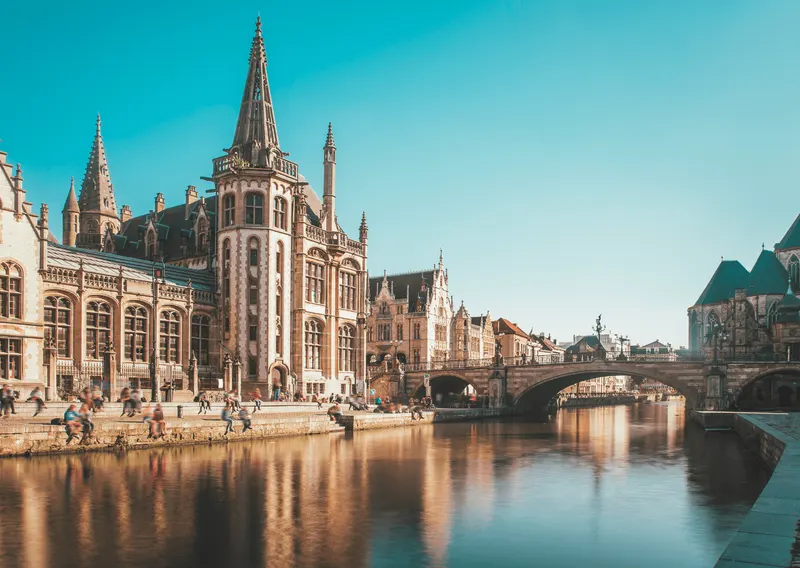
- Graslei and Korenlei quays: Level walkways, perfect for resting and taking in the waterside architecture.
- STAM Museum: It has good signage.
- Ghent Town Hall: Access ramp and inclusive guided visits.
Without a doubt, Ghent invites you to lose yourself among its streets and canals.
Antwerp: art, design and a good urban rhythm
If design, shopping and art are your thing, then you'll love Antwerp. As well as being elegant and contemporary, this city is fully prepared to welcome people with reduced mobility.
For example, its pavements have dropped kerbs, wheelchair-accessible taxis are available and the most notable museums are fully accessible. Hence, Antwerp in a wheelchair offers a perfect combination of sophistication and accessibility.
The best of Antwerp for people with reduced mobility
- MAS Museum: Level access and panoramic lifts that make the visit easier.
- Fashion Museum (MoMu): Ideal for design lovers.
- Central Station: Lifts, signposted routes and personalised assistance.
- Diamond District: Flat streets, accessible shops and a vibrant atmosphere.
- River Scheldt: A comfortable riverside promenade, with open views.
Thanks to all these places, Antwerp combines art and accessibility like few other cities in Europe.
Tips for exploring Belgium in a wheelchair
Before you pack your suitcase, it's worth bearing in mind a few details that can make all the difference. To begin with, the official currency is the euro (EUR), and you can pay by card in almost all shops. In addition, if you are travelling from outside Europe, it's advisable to bring a universal adapter, as the sockets are type C and E, with a voltage of 230V.
As for the weather, spring and autumn offer pleasant temperatures and fewer crowds. Although summer is also an option, it tends to be busier. Ideally, plan at least 7 days to explore Brussels, Bruges, Ghent and Antwerp at a relaxed pace. However, if you have less time, you can opt for a 5-day break, adjusting the itinerary to your priorities.
To get between cities, the train is efficient and offers assistance if you book ahead. It's also important to book accessible accommodation in advance, as Belgium is a very popular destination. Apps such as Wheelmap can also help you find accessible entrances and toilets. And if you'd rather not organise it yourself, Travel Xperience can take care of everything for you.
As you can see, Belgium in a wheelchair is an accessible destination full of possibilities.
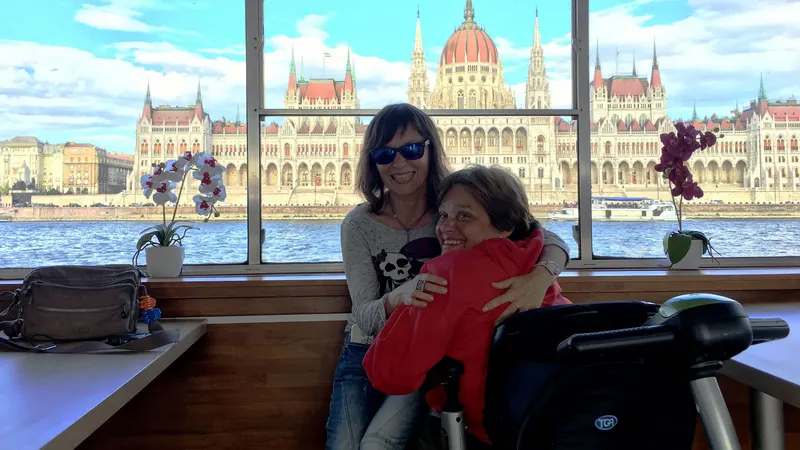
First of all, I should say that I use a wheelchair and this was the first trip I made with my sister. We contacted Travel Xperience and what for us were difficulties, they solved easily.
They gave us the peace of mind we needed and we set off on a trip that turned out to be magical and trouble-free. Thank you so much, especially to Julieta and Ami for such a special trip and for their patience.María José and AmparoRead more testimonials from our travellers on our website
Travelling to Belgium in a wheelchair
Belgium shows that travelling in a wheelchair really is possible. From its fairy-tale cities to its modern infrastructure, the country is firmly committed to more inclusive tourism. You choose who you travel with: on your own, with your partner or with whoever is with you. Either way, you'll find a welcoming setting full of history and unique experiences.
And if you also have the support of a specialist agency such as Travel Xperience, you can enjoy the trip with complete peace of mind. All in all, Belgium in a wheelchair is an authentic, delicious and accessible experience. Go on, discover it for yourself!
How Travel Xperience supports you in Belgium
At Travel Xperience, we specialise in designing tailor-made trips, especially in destinations such as Belgium. You have a 24-hour on-call phone line to call during the trip.
So don't hesitate any longer: get in touch with us and tell us how you want to travel.
Conclusion: accessible Belgium, a European gem to enjoy without rushing
Belgium, with its rich cultural heritage, fairy-tale cities and unforgettable flavours, is moving towards a more inclusive model of tourism. Although there are still areas to improve, the commitment to accessibility can be felt in every corner.
So, if you are looking for a European destination full of history, art and genuine experiences, Belgium in a wheelchair could become one of your most unforgettable adventures. Pack your enthusiasm for travel, read our recommendations and, above all, get ready to fall in love with a Belgium designed for people with reduced mobility.
At Travel Xperience we don't just organise itineraries; we design personalised experiences so that you can enjoy yourself comfortably and at your own pace. For this reason, our team takes care of the transport, tickets, assistance and accommodation.
All you have to do is focus on enjoying yourself, as you deserve. All set to explore Belgium?
Frequently asked questions about travelling to Belgium in a wheelchair
Which Belgian cities offer the best accessibility for wheelchair users?
Brussels, Bruges, Ghent and Antwerp stand out for their good infrastructure, accessible transport and accessible accommodation.
How do I get between Brussels, Bruges, Ghent and Antwerp if I use a wheelchair?
You can travel on accessible trains between the main cities, with assistance arranged in advance. You can also book private accessible transfers.
Where can I find accessible toilets and accessible services in the main Belgian cities?
In train stations, museums, shopping centres and tourist attractions you will find accessible toilets, although they are not always clearly signposted.
What is the best time of year to visit Belgium in a wheelchair?
Spring and early autumn are ideal: mild weather, less rain and fewer crowds, so you can explore the cities comfortably.
How many days are recommended for exploring Belgium comfortably and without rushing?
Between 7 and 10 days allow you to enjoy Brussels, Bruges, Ghent and Antwerp without rushing, adapting the pace to your needs.
Can I hire mobility scooters or powered wheelchairs in the main cities?
Yes, in Brussels there are suppliers that hire out mobility scooters and powered wheelchairs, with delivery to hotels or airports.
What mistakes should I avoid when planning an accessible route through Belgium?
Not checking the real accessibility of hotels and monuments, planning too many journeys in a single day and not booking assistance in advance.
Is it possible to combine Belgium with other European destinations on an accessible trip?
Yes, thanks to train and air connections you can extend your trip to the Netherlands, France or Germany with accessible routes.
Is Belgium a safe country to travel to if I have reduced mobility?
Yes, Belgium is a safe country, with quiet streets and services prepared for people with reduced mobility in urban areas.
Can I travel by train in Belgium if I use a wheelchair?
Yes, most InterCity trains are accessible and have spaces reserved for wheelchairs, although they require advance notice.
Which train stations in Belgium are accessible?
The main stations, such as Brussels-Central, Brussels-Midi, Antwerp-Central and Bruges, have lifts, ramps and assistance.
How can I request assistance at train stations in Belgium?
You must request it at least 24 hours in advance on the SNCB website or through the station, to ensure you are accompanied when boarding and on arrival.
What additional support does Travel Xperience offer during a trip to Belgium in a wheelchair?
We offer personalised planning, assistance with transport, confirmed bookings in accessible hotels and support throughout the trip.
Published on .