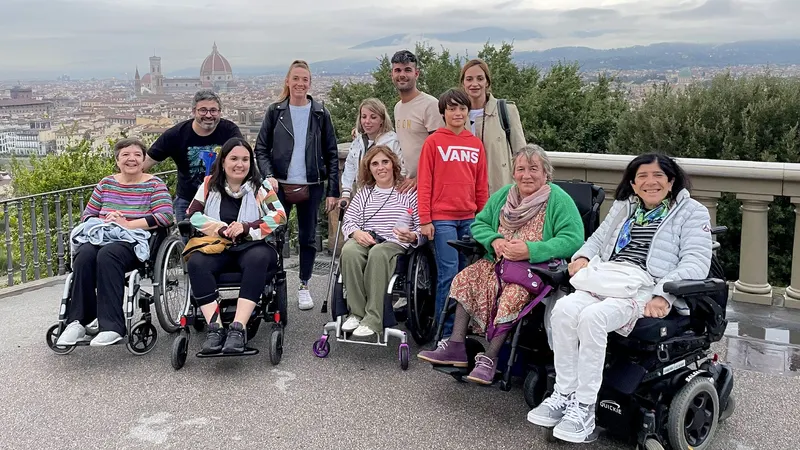
Travelling to Florence in a wheelchair: your accessibility guide
- Europe
- Italy
- Culture and art
Guide to travelling to Florence in a wheelchair: what to visit, accessibility features of the city, and tours and trips from Florence.
Florence is explored amid art, history and beauty at every turn.
Travelling to Florence in a wheelchair or with reduced mobility is far more than possible: it is an accessible experience that lets you discover the Renaissance at its finest. From Brunelleschi's magnificent dome on the Cathedral of Santa Maria del Fiore to the treasures of the Uffizi Gallery, every corner is full of magic and things to discover.
In this accessibility guide, we show you how Florence, with its cobbled streets and rich history, offers accessible options so that you can enjoy its exquisite food, the colours of its local markets and the warmth of its people.
Florence is not just a destination; it is an experience designed to inspire your senses and create unforgettable memories.
What to visit if you want to enjoy accessible tourism in Florence
Florence is a city full of history, art and architecture, and although many of its monuments and museums date back centuries, the city has managed to adapt them so that all travellers, including those who travel in a wheelchair, can enjoy them.
If you are preparing to travel to Florence in a wheelchair, you will be glad to know that there are many emblematic places with accessible entrances and inclusive services. Below, we offer a selection of some of the city's most important and accessible sights.
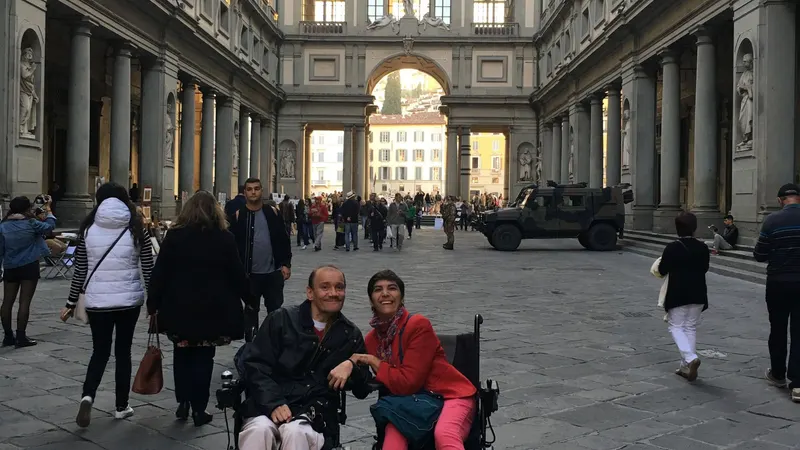
Uffizi Gallery
The Uffizi Gallery is one of the most prestigious museums in the world, home to an impressive collection of Renaissance works, such as those by Botticelli, Leonardo da Vinci and Raphael. Access to the museum is adapted for people with reduced mobility: it has entrance ramps and a lift that lets you move comfortably between its three floors.
The signage has also been improved, making the route easier to follow. There is also priority entry for wheelchair users, which helps you avoid long queues.
Accademia Gallery
This museum is famous above all for housing Michelangelo's imposing “David”, one of the most celebrated sculptures in the history of art. The Accademia Gallery has accessible entrances and a lift that makes it easier to move between the different rooms.
Along its corridors, you can enjoy a collection of sculptures and paintings. Priority entry for people with disabilities and their companions is also available.
The Duomo of Florence (Cathedral of Santa Maria del Fiore)
Florence's majestic cathedral, with its famous dome designed by Brunelleschi, is one of the city's icons.
Although the dome and Giotto's bell tower have limited access for people with reduced mobility, access to the interior of the cathedral is accessible. Ramps and wide corridors have been put in place.
In addition, Piazza del Duomo, which surrounds the cathedral, is spacious and easy to get around. For those who want the full experience, it is advisable to check the accessibility options for visiting the bell tower and the dome.
Piazza della Signoria and the Palazzo Vecchio
Piazza della Signoria is the heart of Florence, a square full of history and surrounded by impressive open-air sculptures, such as a replica of Michelangelo's “David”. This square is accessible and free of obstacles, which makes it easy to get around in a wheelchair.
In the Palazzo Vecchio, which houses the museum of the same name, you will also find accessible entrances, ramps and lifts to explore the palace's different rooms. Here you can enjoy a panoramic view of the square and immerse yourself in the history of the city.
The Ponte Vecchio
The Ponte Vecchio is one of Florence's most emblematic bridges, known for its jewellery shops and its panoramic views of the River Arno.
Although, as a medieval structure, it has uneven paving, the city has made improvements to its accessibility, making the walk across the bridge comfortable for those who travel in a wheelchair. In addition, access to both ends of the bridge has been improved, so that visitors can enjoy the views without major difficulty.
The San Salvi Museum and the San Lorenzo Library
This lesser-known but impressive museum is a hidden gem in Florence. Accessibility has been carefully considered, and the museum has ramps and wide corridors that make it possible to explore the works of art on display.
The same goes for the San Lorenzo Library, which has accessible entrances so that visitors with reduced mobility can enjoy its collection and Michelangelo's splendid architecture.
The Boboli Gardens
Located behind the Pitti Palace, the Boboli Gardens are an ideal place to relax while you enjoy the beauty of the Florentine landscape. The gardens have some accessible paths, although some areas have slopes, so it is advisable to bring suitable equipment, such as a powered wheelchair.
However, the main routes and entrances are accessible, which makes for a calm and pleasant experience for people with reduced mobility.
Bargello Museum
This museum, which houses an impressive collection of Renaissance sculptures, including works by Donatello and Michelangelo, is adapted for people with disabilities. Access to the museum is straightforward, with ramps at the entrance and inside, and it is designed so that visitors can move freely between its rooms.
Accessible toilets in Florence
To make your visit to Florence even more comfortable, it is worth knowing that the city has accessible toilets at several tourist sites. In addition to the Uffizi Gallery and the Accademia Gallery, accessible toilets are available in places such as Piazza della Signoria, the Bargello Museum, and in many cafés and restaurants in the historic centre.
Using apps such as Kimap (opens in a new tab) can also be useful for finding accessible toilets near the places you want to see.
Florence is a city that has worked hard to be accessible, so that everyone, whatever their mobility, can enjoy its incredible cultural and artistic heritage.
If you are planning to travel to Florence in a wheelchair (opens in a new tab), you will find a city full of wonders.

If I had to travel again, I would without a doubt do it with Travel Experience. The peace of mind of travelling knowing that everything is going to be ready for getting around in a wheelchair is priceless. The coordination they have between them is amazing.
Our whole honeymoon was on wheels. Apart from some problems we had that were completely unrelated to the agency. I think that without them we could not have resolved the problems that came up, nor could we have enjoyed the trip, given the number of architectural barriers that still exist today.
Our trip took us to the wonderful city of Florence and lovely Tuscan villages. Thanks to Travel Experience for making our honeymoon perfect.
Juan and Merche.
Accessibility features of the city of Florence
Florence, famous for its history and medieval architecture, presents both challenges and progress in accessibility. Although the cobbled streets and historic layout can make getting around harder, the city has made improvements to make it more accessible, especially in the key tourist areas.
Streets and pavements: challenges and progress in urban accessibility
Florence's historic centre has narrow, cobbled streets, which can be uncomfortable for those who travel in a wheelchair. However, in main areas such as Piazza del Duomo and Piazza della Signoria, the pavements have been improved, creating more accessible spaces.
Some streets have been renovated with smoother paving and ramps have been installed at strategic points. If you prefer to plan ahead, you can use apps that will help you find accessible routes with better paving.
If you are thinking of taking a trip to Florence and you use a wheelchair, we help you prepare for it.
Accessible public transport: main features and practical tips
Florence has accessible buses equipped with ramps and spaces reserved for wheelchairs, although on some older vehicles the ramp may not be working. The tram system, especially line T1, has level entrances and stations adapted with ramps and lifts.
Trenitalia also offers assistance to people with reduced mobility through its “Sala Blu” service at the main stations. Wheelchair-accessible taxis are available, although it is advisable to book them in advance. You can count on our accessible transport services for the journeys where you need them.
Florence has made significant progress in accessibility, with accessible public transport options and improvements to its streets. Travelling to Florence in a wheelchair is becoming more and more comfortable, and with a little planning, you will enjoy an inclusive experience.
Tours and trips from Florence
Florence is not only rich in history and art, it is also the gateway for exploring Tuscany.
At Travel Xperience, we offer a range of private, accessible tours tailored to your needs, which will let you discover iconic destinations and picturesque regions. From Pisa and Siena to the Chianti wine region, there is plenty to explore, whether in private accessible vehicles, trains or accessible buses.
Here are some of the places you should visit:
Pisa: the Leaning Tower
Pisa is a popular destination, famous for its Leaning Tower. We recommend taking a tour, either in accessible vehicles or by accessible train, with easy access to the Piazza dei Miracoli, the Cathedral and the Baptistery, all accessible for people with reduced mobility.
Siena: a medieval journey
Siena is another jewel of Tuscany. You can get there comfortably by accessible vehicle, bus or train. The Piazza del Campo and the Duomo are accessible, which allows a relaxed visit to this fascinating medieval city. The old town is well adapted, which makes it easier to get around.
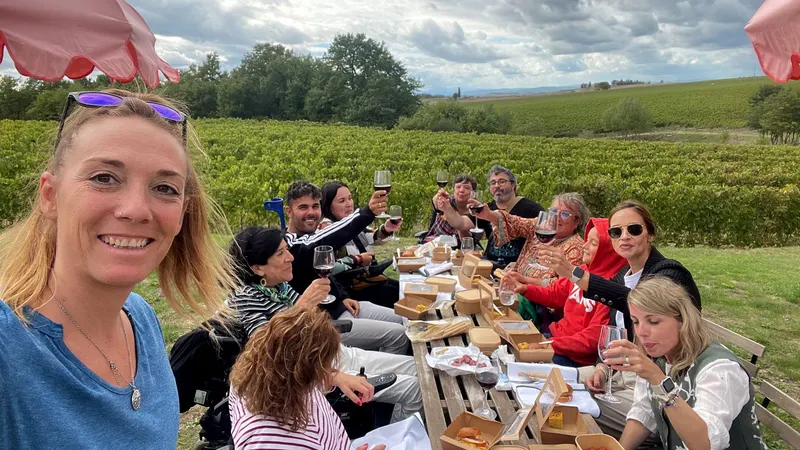
Chianti: landscapes and gastronomy
If you love wine or cheese, Chianti is the ideal place. We can recommend private tours to accessible wineries, where you can enjoy tastings while taking in the hills of Tuscany. Villages such as Greve in Chianti have accessible squares, and our tours are in accessible vehicles.
San Gimignano: medieval towers and charm
San Gimignano, known for its medieval towers, is accessible and you can visit it on a private tour in accessible vehicles. The historic centre has accessible areas, especially Piazza della Cisterna, which makes it possible to explore this lovely village without problems. It is also possible to get there by accessible bus, although access to the old town is limited.
Lucca: Renaissance walls
Lucca, with its intact walls, is another recommended excursion. You can visit it on a private tour with accessible transport to the city, where you can explore the walls and the old town in an accessible way. Lucca is especially welcoming to wheelchair users, with wide, well-adapted streets.
Volterra: Etruscan history in a medieval village
Volterra, famous for its Etruscan legacy, is perfect for those looking for tranquillity. To visit it, we recommend an accessible tour with a specialist guide through its historic centre, including the Roman Theatre and the Cathedral of Volterra, all accessible. It is an ideal destination for those who want to explore the heart of Tuscany.
Arezzo: art and accessible medieval heritage
Arezzo is known for its frescoes by Piero della Francesca and its Piazza Grande. From Florence, we offer tours in accessible vehicles or by train, which will let you explore the city.
Accessibility
If you want to organise your trip, you can get in touch with us. At Travel Xperience, we design, together with you, fully tailor-made trips for people with disabilities or those with mobility limitations.
All our services will be personalised to your needs and, during the trip, you will have the support of our team, 24 hours a day, to help you resolve any incident that might arise.
Conclusion
Florence is an ideal destination for everyone to explore, whatever their mobility needs.
With the information we offer you at Travel Xperience, you will be able to enjoy the city and Tuscany.
The city has made significant progress in improving accessibility, so that you can experience its magic and explore it however you wish. On the other hand, if you decide to count on our help, travelling to Florence in a wheelchair becomes an unforgettable experience, where all you have to worry about is enjoying yourself.
Whether you are strolling through the Uffizi Gallery or exploring the hills of Chianti, Florence and Tuscany offer you an accessible experience. Now is the perfect time to discover everything this city has to offer you!
Published on .