Italian food in a wheelchair: flavours of Italy for foodies
- Europe
- Italy
- Food and wine
Pizza in Naples, gnocchi in Sorrento, tiramisu in Rome, arancine in Palermo and more: a route through Italian food in a wheelchair.
Flavours of Italy: a wheelchair trip for foodies
Italy is not just visited, it is tasted. In fact, every city has a dish that is living memory, tradition and emotion served at the table.
That is why today we suggest exploring Italy in a wheelchair while letting your palate be your best guide. From the south to the north, you will discover a route full of flavours.
What is more, from historic pizzerias to wineries in dreamlike landscapes, with the right planning and expert support from Travel Xperience, a food trip around Italy in a wheelchair can become not only possible, but a delicious and unforgettable experience.
So, if you are ready to taste the best of accessible Italy, keep reading and let yourself be tempted
Naples and pizza Margherita
The journey begins in Naples, the birthplace of pizza. Trying an authentic Margherita is almost a must, as it combines a light base, San Marzano tomatoes, mozzarella and fresh basil. Eating it in a traditional pizzeria is also a unique experience, and nowadays many of them have step-free access and comfortable spaces.
After your meal, you can stroll along the Lungomare, which is completely level and, at the same time, offers incredible views of Vesuvius. You can also visit the National Archaeological Museum, which has a lift and accessible toilets.
And, if that were not enough, if you are curious, the small pizza museum explains how a humble dish conquered the world. In this way, Naples becomes a perfect first stop for anyone who wants to discover Italy in a wheelchair.
Sorrento and gnocchi alla sorrentina
Very close to Naples lies Sorrento, and here the undisputed stars are the gnocchi alla sorrentina, soft and covered in tomato sauce with melted mozzarella, which win over any palate. This makes trying this dish an essential experience for anyone exploring the region.
After the meal, you can also explore the old town, which is easily reached by lift from the port. This route combines pedestrian, accessible streets, which makes the visit easier. In fact, one way to walk off your lunch is to take a stroll along the Marina Piccola, which also has accessible entrances and charming views of the Tyrrhenian Sea.
Rome and tiramisu
In the capital of accessible Italy, food has a very special place. Rome wins you over not only with its history, but also with its most famous dessert: tiramisu. That is why enjoying it in a local café is a simple pleasure and, at the same time, truly delicious.
Between one sweet and the next, you can also visit the Colosseum, which has a lift, or explore the Vatican Museums, which offer accessible routes. Both the Trevi Fountain and Piazza Navona have ramps nearby, which makes the visit much easier.
So, if you are going to travel to Italy in a wheelchair and, specifically, plan to see Rome, here is our complete guide on how to visit Rome in a wheelchair.
Palermo and arancine
In Sicily, Palermo awaits you with its delicious arancine, crisp on the outside and creamy on the inside. What is more, trying them in a traditional market such as Ballarò is quite an experience. Although the ground is somewhat uneven, with an accessible tour it is possible to go round it with no trouble and fully enjoy the local atmosphere.
The city also offers other accessible visits that are well worth it. For example, the Palermo Cathedral, which has an accessible side entrance, or the impressive Teatro Massimo. In this way, Palermo firmly joins the list of gems of accessible Italy.
Bologna and bolognese sauce
Bologna is, without doubt, a food capital par excellence. This is where the real bolognese sauce is made, the famous ragù, which is always served with tagliatelle and never with spaghetti. Trying it in the city itself is an essential experience for lovers of Italian cooking.
After the meal, the city offers several accessible options to round off the visit. On the one hand, you can walk around the Piazza Maggiore, which is spacious and completely level.
On the other hand, the Mercato delle Erbe has accessible aisles that make getting around easy. Finally, you can also visit the Museum of the History of Bologna, which is accessible.
Tuscany and the final toast
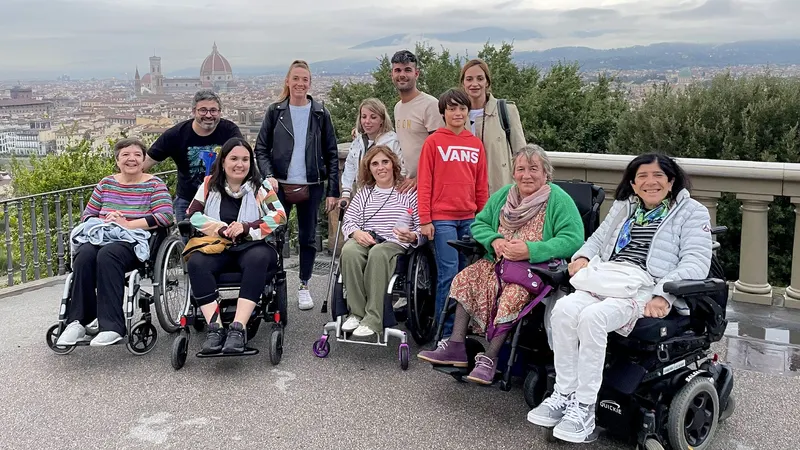
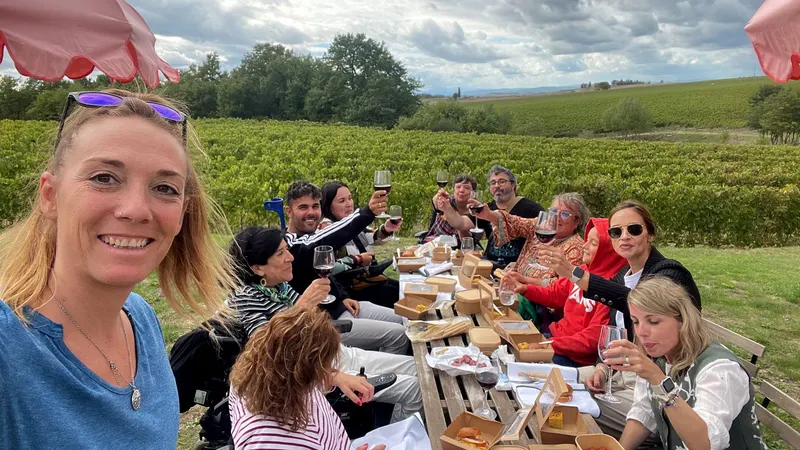
The journey ends in Tuscany, a region where wines take centre stage. A Chianti or a Brunello di Montalcino tastes even better when enjoyed in an accessible winery, equipped with ramps and spacious tasting rooms that make the experience comfortable for everyone.
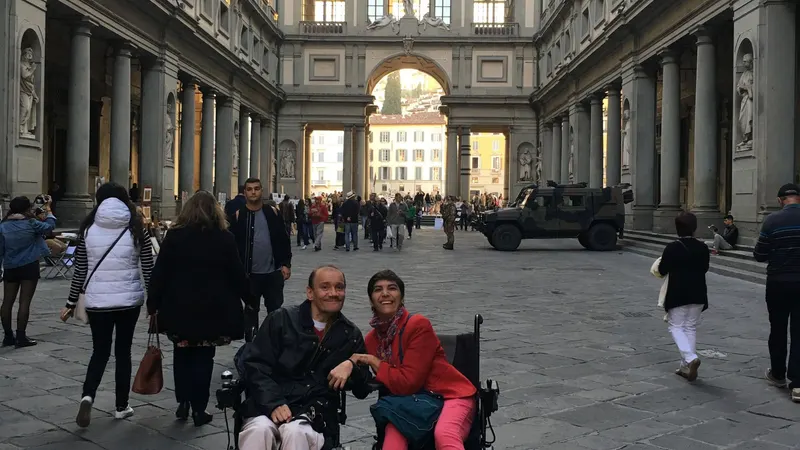
In Florence, you can also visit the Cathedral of Santa Maria del Fiore, which has an accessible side entrance, or explore the Uffizi Gallery, which has lifts and accessible toilets.
Along the Chianti route, several medieval villages have significantly improved their accessibility.
If you would like to linger in Tuscany on your trip to Italy in a wheelchair, we recommend reading our post on The 5 places you can't miss in Tuscany or, if you prefer to stay in Florence, here is our Guide to travelling to Florence in a wheelchair.
Accessible Italy, a journey to savour
In short, every destination, every recipe and every story becomes an accessible experience for everyone. That is why at Travel Xperience we design routes that not only combine the best of Italian food, but also include accommodation, transport and activities that are accessible, so that the trip is comfortable and complete.
So pack your bag and get your appetite ready, because the time has come to prepare to taste Italy in every bite and discover that a trip to Italy in a wheelchair can be as delicious as it is unforgettable.

Planning and management worth a 10. I have been travelling with them for years and there is a reason I keep coming back. My latest experience in Tuscany with Irina was one of the best. With this team, the barriers to travelling disappear.Eduardo – Tuscany group tripRead more testimonials from our travellers on our website
Final tips for travelling to Italy in a wheelchair
Book everything in advance:
from museum visits to tickets for monuments such as the Colosseum or the Vatican Museums. In many cases, places for wheelchair users are limited, so it is best to secure them early to avoid surprises.
Best times to travel:
spring (April to June) and autumn (September and October) are ideal, as they offer mild weather, fewer tourists and more pleasant landscapes. However, summer can also be a good option if you are looking for atmosphere and festivals, although you should bear in mind that it is usually hotter and busier with visitors.
Currency:
the official currency is the euro (€). You can change money at banks or bureaux de change, but it is also practical to withdraw cash directly from cash machines, available in most Italian cities.
Plug types:
in Italy, plugs of type C, F and L are used, with a voltage of 230V. It is therefore advisable to bring a universal adaptor in case your equipment has a different type of connector.
Highly sought-after visits:
attractions such as the Uffizi Gallery in Florence, the Vatican Museums in Rome or the Duomo in Milan require booking in advance. All of them also have accessible entrances, lifts and accessible toilets, which makes the experience easier.
Visas:
citizens of the European Union do not need a visa to travel to Italy. Visitors from other countries, on the other hand, should always check the requirements with the Italian embassy or on the official website of the Italian Ministry of Foreign Affairs before organising the trip.
Transport:
in many Italian cities, such as Rome, Florence or Milan, there are city buses and accessible taxis. If you are going to use high-speed trains, such as Trenitalia or Italo, remember to request assistance in advance for boarding and alighting.
Accessible services
At Travel Xperience, we design tailor-made trips, especially in destinations such as Italy, for people with disabilities or reduced mobility.
Our services are personalised to your needs, and our team is available 24 hours a day during your trip, to give you the support you need at your destination. Get in touch with us and let us help you plan your trip.
Conclusion: accessible and delicious Italy
Travelling to Italy in a wheelchair is not only possible, it can also become one of the most unforgettable experiences of your life. In fact, thanks to the combination of food, history, art and unique landscapes, the country offers more and more accessible options for discovering it.
From emblematic museums and historic monuments to food routes and accessible wineries, everything is within reach as long as there is good planning. For all these reasons, accessible Italy becomes a destination to enjoy with all the senses… and, above all, in every bite.
That is why at Travel Xperience we do not just create itineraries: we design personalised experiences so that your trip to Italy for people with reduced mobility is comfortable, safe and at your own pace.
Our team takes care of the transport, tickets, assistance and accommodation for your trip to Italy in a wheelchair.
All set to savour Italy in a wheelchair?
Frequently asked questions about travelling to Italy in a wheelchair
Which Italian cities are most accessible for wheelchair users?
The most accessible cities in Italy are Rome, Milan and Bologna, thanks to their accessible infrastructure, accessible transport options and a wide range of inclusive accommodation. Even so, with good planning, Travel Xperience will personally recommend how to visit other cities so that you can make the most of them.
What is public transport like in Italy for people with reduced mobility?
In large cities, buses usually have ramps and space reserved for wheelchairs. Access to the metro and trains varies a lot depending on the city and the station. The trains that connect the main cities are also accessible. At Travel Xperience we will take care of requesting assistance at stations for you, so that you can travel with peace of mind.
Is it easy to find accessible restaurants in Italy?
Yes, although it depends on the area. In historic centres there may be architectural barriers, but many tourist and urban areas have accessible venues with disability-aware staff.
Can you visit the Colosseum or the Vatican in a wheelchair?
Yes, both places are accessible. The Colosseum has lifts, accessible routes and free entry for people with disabilities. At the Vatican there are accessible entrances and services designed to make the visit easier. We help you organise the experience according to your needs.
Is there accessible accommodation in the main cities of Italy?
Italy offers a wide range of accessible accommodation in cities such as Florence, Venice or Naples. At Travel Xperience we select only accommodation that we know personally and that meets real accessibility requirements.
How can I get between Italian cities if I travel in a wheelchair?
The Italian rail network connects the main cities well and many trains are accessible. You can also book private accessible transport with us for personalised journeys with assistance.
Are there accessible tours of Italy?
Yes. At Travel Xperience we organise personalised tours of Italy, with accessibility checked. Whether you want to explore Rome, tour Tuscany or enjoy the lakes of the north, we adapt everything to your needs.
What should I bear in mind if I want to visit Venice in a wheelchair?
Venice has its challenges because of its bridges and narrow streets, but there are accessible areas and accessible routes. There are water taxis with ramps. We plan your route.
Can you hire wheelchairs or mobility scooters in Italy?
Yes. In the main Italian cities we work with suppliers who offer hire of manual and powered wheelchairs and scooters, with delivery to your hotel or the airport if you need it.
What kind of assistance does Travel Xperience offer on trips to Italy?
From planning the itinerary to support during the trip, we offer 360° assistance. We advise you, arrange your accessible bookings and are available 24 hours a day during your stay, so that your only concern is enjoying yourself.
Published on .